Examen de práctica del DMV de Florida: Automóvil / Permiso, gratis 2026
El examen de conocimiento Automóvil / Permiso de Florida tiene 50 preguntas y necesitas 40 correctas (80%) para aprobar. Practica gratis con preguntas escritas del manual oficial del conductor de Florida — cada una con una explicación clara, y puedes repetirlo cuantas veces quieras sin registrarte.
Contenido revisado con los manuales oficiales del conductor · 12 de agosto de 2026
Qué incluye el examen escrito de Florida
El examen de conocimiento Automóvil / Permiso de Florida tiene 50 preguntas; necesitas 40 correctas (80%) para aprobar, en 60 minutos.
Basado en el formato oficial del examen de Florida: confirma siempre los detalles vigentes con el DMV de tu estado.
¿Prefieres estudiar en papel?
Nosotros creamos y vendemos esta edición: es nuestro propio producto, no el de un socio, y nadie nos pagó por mostrártela. Todo su contenido también se puede leer gratis en este sitio; lo que compras es el formato imprimible.
Estudia sin conexión
Paquete de práctica de Florida — Edición imprimible 2026
Las 521 preguntas de práctica de Florida con explicaciones y solucionarios: automóvil, motocicleta, CDL y frenos de aire, en inglés y en español. Ocho PDF listos para imprimir, 780 páginas; las ediciones de automóvil, motocicleta y CDL incluyen 146 tarjetas recortables de señales.
Obtener la edición imprimible — $4.99- Pago único
- Descarga inmediata
- Reembolso de 14 días
Practica por tema
Concéntrate en un área a la vez: cada tema tiene su propio conjunto de preguntas de práctica de Florida.
Aprende las formas, los colores y los significados de las señales reglamentarias, de advertencia y de guía: desde alto y ceda el paso hasta señales de construcción y de zona escolar.
Límites de velocidad, reglas para girar y señalizar, requisitos de luces y cinturón, y las leyes cotidianas que todo conductor debe cumplir.
Cómo interpretar los semáforos, las líneas de carril y las marcas del pavimento, incluidas las líneas amarillas y blancas, las flechas y las luces intermitentes.
Quién pasa primero en intersecciones, cruces de cuatro vías, glorietas y pasos peatonales, y cómo ceder el paso a peatones y vehículos de emergencia.
Distancia de seguimiento, exploración visual, puntos ciegos, uso de las luces y los hábitos que evitan choques y te mantienen en control.
Conducir con seguridad cerca de motocicletas, bicicletas, camiones grandes, peatones y autobuses escolares, y saber quién tiene la prioridad.
Límites de alcohol en la sangre, leyes de tolerancia cero y consentimiento implícito, y cómo el alcohol y las drogas —legales o no— afectan tu conducción.
Estacionamiento legal e ilegal, colores de las aceras, distancias respecto a hidrantes y cruces, y cómo estacionar con seguridad en pendientes.
Elegir una velocidad segura, mantener un colchón de espacio, ajustarte al clima y al tráfico, y entender la distancia de frenado.
Qué hacer cuando algo sale mal: fallo de frenos, reventones de llantas, derrapes y quedarse parado sobre las vías del tren.
El sistema de puntos, la suspensión de la licencia, las reglas de la licencia provisional, los requisitos de seguro y otros aspectos básicos de la licencia.
Cómo aprobar a la primera
- Lee el manual oficial del conductor de Florida al menos una vez antes del examen.
- Practica por tema para encontrar tus puntos débiles y corrígelos.
- Haz exámenes completos de práctica hasta aprobar con comodidad cada vez.
- Lee cada explicación: entender es mejor que memorizar.
Examen Automóvil / Permiso de Florida — preguntas frecuentes
¿Cuántas preguntas tiene el examen Automóvil / Permiso de Florida?
El examen escrito Automóvil / Permiso de Florida tiene 50 preguntas y necesitas 40 correctas (80%) para aprobar. Nuestros exámenes de práctica reflejan ese formato.
¿Cuántas preguntas puedo fallar en el examen Automóvil / Permiso de Florida?
Puedes fallar hasta 10 de las 50 preguntas y aún aprobar — necesitas 40 correctas, que es el 80%.
¿Cuánto tiempo tengo para el examen Automóvil / Permiso de Florida?
El examen de conocimiento Automóvil / Permiso de Florida tiene un límite de 60 minutos. Nuestra simulación cronometrada usa el mismo límite para que practiques tu ritmo.
¿Puedo repetir el examen de práctica?
Sí: practica cuantas veces quieras, totalmente gratis. Las preguntas y las opciones de respuesta se mezclan cada vez.
¿Puedo hacer el examen de práctica de Florida en español?
Sí. Aquí cada pregunta está disponible en inglés y español — cambia de idioma cuando quieras. Muchos estados también ofrecen el examen real en otros idiomas además del inglés; confirma qué ofrece Florida con tu DMV.
¿Puedo practicar en mi teléfono?
Sí. Los exámenes de práctica funcionan en cualquier navegador móvil o de escritorio — sin app ni registro — para que estudies donde sea.
¿Son estas las preguntas reales del examen del DMV?
No. Nuestras preguntas son originales, escritas a partir del manual oficial vigente del conductor de Florida para reflejar los temas y el estilo del examen real. No estamos afiliados a ningún DMV ni agencia gubernamental.
¿Cuál es la mejor manera de estudiar?
Lee el manual del conductor de Florida, practica por tema para reforzar tus áreas débiles y termina con exámenes completos hasta aprobar de forma constante.
Otros exámenes de práctica de Florida
Haz el examen Automóvil / Permiso en otro estado
Cada pregunta de Florida se escribe a partir del manual oficial del conductor de Florida y se verifica con su edición vigente. DMV Test Free es un recurso de estudio gratuito e independiente, sin afiliación con ningún DMV o agencia gubernamental. Acerca de DMV Test Free
Preguntas del examen Automóvil / Permiso de Florida con respuestas
20 preguntas de ejemplo del banco de preguntas Automóvil / Permiso de Florida, cada una con la respuesta correcta, una breve explicación y la sección del manual oficial de la que proviene.
Ver las 20 preguntas con respuestas
1. Sus ruedas derechas se salen del pavimento hacia un acotamiento blando. Usted debe:
Respuesta correcta: Soltar poco a poco el acelerador, mantener el volante derecho, reducir la velocidad y luego regresar suavemente
Dar un volantazo o frenar con fuerza puede provocar un derrape o una volcadura. Suelte poco a poco el acelerador, mantenga el volante derecho, deje que el auto reduzca la velocidad y regrese suavemente al pavimento cuando sea seguro.
Fuente: Manual del Conductor de Florida — Emergencias al conducir
2. ¿Cuál es el significado correcto de una señal amarilla en forma de banderín (triángulo apaisado) que dice 'NO PASSING ZONE'?
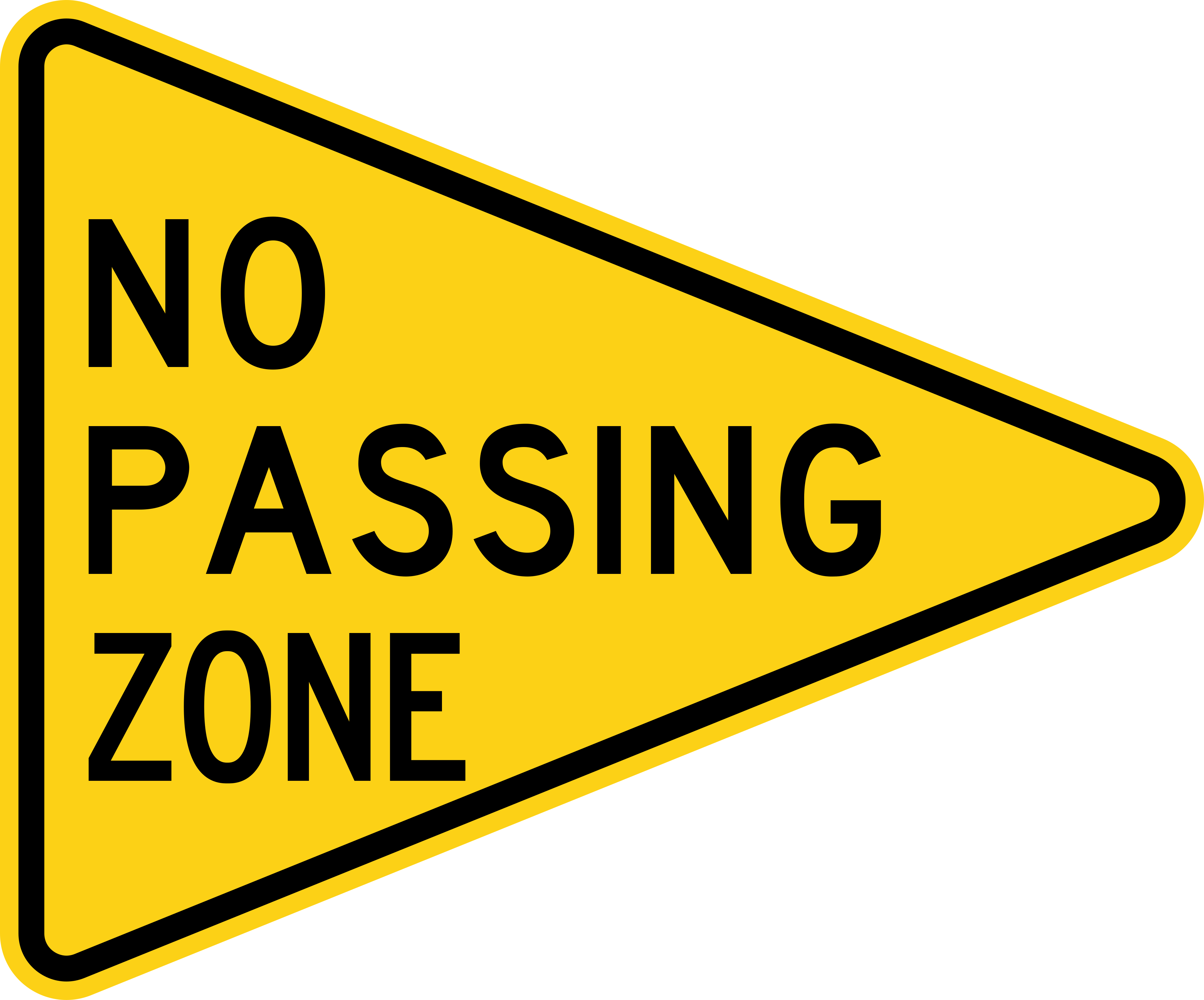
Respuesta correcta: Está entrando en una zona donde no se permite rebasar; no rebase a otros vehículos.
Está entrando en una zona donde no se permite rebasar; no rebase a otros vehículos. (Esta es la señal «Zona de no rebasar».)
Fuente: Manual del Conductor de Florida — Señales de tránsito
3. Antes de que un solicitante menor de 18 años pueda pasar de la licencia de aprendizaje a una licencia de conducir Clase E, un adulto debe certificar que el joven ha manejado:
Respuesta correcta: 50 horas, diez de ellas de noche
Un padre, tutor o adulto responsable de al menos 21 años firma una declaración que confirma 50 horas al volante, diez de ellas de noche.
Fuente: Manual del Conductor de Florida — Licencia de conducir graduada
4. Un conductor menor de 21 años es detenido y registra un nivel de alcohol en la sangre de .05. Además de perder el privilegio de conducir, ese conductor también debe:
Respuesta correcta: Completar un curso sobre abuso de sustancias
La tolerancia cero suspende a cualquier conductor menor de 21 años a partir de .02. Cuando la lectura llega a .05, el conductor además tiene que tomar un curso sobre abuso de sustancias, y después se le realiza una evaluación.
Fuente: Manual del Conductor de Florida — Alcohol y otras drogas
5. ¿Qué es lo más eficaz que puede hacer para protegerse en un choque?
Respuesta correcta: Usar correctamente el cinturón de seguridad
Los cinturones de seguridad lo mantienen en su asiento y frente al volante durante un choque, y son la mejor protección contra las lesiones y contra salir despedido del vehículo.
Fuente: Manual del Conductor de Florida — Cinturones de seguridad
6. Al rebasar a un ciclista en la vía, la ley de Florida establece que usted debe dejar:
Respuesta correcta: Al menos tres pies de separación
Al rebasar a una bicicleta, debe dar al menos tres pies de espacio. Los ciclistas tienen los mismos derechos y obligaciones que los conductores y pueden ser difíciles de ver.
7. Una luz amarilla intermitente del semáforo o una flecha amarilla intermitente le indica que debe:
Respuesta correcta: Reducir la velocidad y avanzar con precaución
Una señal amarilla intermitente es una luz de precaución. Reduzca la velocidad y avance con cuidado, atento al tránsito que cruza y a los peatones. Una flecha amarilla intermitente significa que puede girar, pero primero debe ceder el paso.
8. Además de la prohibición estatal de enviar mensajes de texto, sostener y usar un teléfono inalámbrico mientras conduce está específicamente prohibido:
Respuesta correcta: En las zonas escolares activas y en las zonas de trabajo activas
Enviar mensajes de texto mientras se conduce está prohibido en todo el estado. Además, sostener y usar un dispositivo inalámbrico está prohibido en las zonas escolares activas y en las zonas de trabajo donde haya trabajadores presentes. El uso de manos libres sigue permitido en los demás lugares.
Fuente: Manual del Conductor de Florida — Conducción distraída
9. ¿Qué tres distancias sumadas conforman la distancia total de frenado?
Respuesta correcta: Distancia de percepción, distancia de reacción y distancia de frenado
Primero sus ojos y su cerebro detectan el peligro, luego su pie viaja hasta el pedal y, por último, los frenos detienen el auto por completo. Esas tres distancias juntas son lo que recorre antes de quedar detenido.
Fuente: Manual del Conductor de Florida — Distancia de frenado
10. En un cruce con señales de pare en dos sentidos, usted espera para girar mientras otro conductor en la misma intersección piensa seguir de frente. ¿Quién avanza primero?
Respuesta correcta: El conductor que sigue de frente, porque quien gira debe ceder el paso
Florida da prioridad al movimiento de paso directo en un cruce con pare en dos sentidos, de modo que el conductor que planea girar espera al vehículo que continúa de frente.
11. Cuando se estaciona de frente cuesta arriba junto a una acera, las ruedas delanteras deben girarse:
Respuesta correcta: En dirección contraria a la acera, para que la rueda retroceda y se apoye contra ella
De frente cuesta arriba con una acera, gire las ruedas en dirección contraria a la acera. Si el auto retrocede, la rueda delantera se apoya contra la acera y lo detiene.
12. Su auto tiene frenos antibloqueo y usted necesita frenar con fuerza para evitar un choque. La técnica correcta es:
Respuesta correcta: Pisar el pedal con fuerza, mantenerlo así y maniobrar para esquivar
Los frenos antibloqueo bloquean y liberan las ruedas mucho más rápido de lo que podría hacerlo cualquier conductor. Una presión fuerte y sostenida mantiene ese sistema trabajando y le deja libertad para maniobrar, mientras que soltar el pedal o bombearlo simplemente lo desactiva.
Fuente: Manual del Conductor de Florida — Frenado de emergencia
13. ¿Cuál es el significado correcto de una señal blanca que dice 'NO PARKING ANY TIME'?
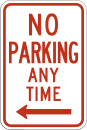
Respuesta correcta: Se prohíbe estacionar aquí en todo momento.
Se prohíbe estacionar aquí en todo momento. (Esta es la señal «Prohibido estacionar en todo momento».)
Fuente: Manual del Conductor de Florida — Señales de tránsito
14. Un joven de 16 años con una licencia de conducir de Florida generalmente no puede conducir durante qué horas, a menos que vaya con un conductor con licencia de 21 años o más o que vaya al trabajo?
Respuesta correcta: De 11 p.m. a 6 a.m.
A los 16 años, la conducción está restringida entre las 11 p.m. y las 6 a.m., a menos que lo acompañe un conductor con licencia de 21 años o más, o que el joven vaya hacia o desde el trabajo. A los 17 años, el horario restringido es de 1 a.m. a 5 a.m.
Fuente: Manual del Conductor de Florida — Licencia de conducir graduada
15. Según la ley de 'consentimiento implícito' de Florida, ¿qué sucede si usted se niega a una prueba legal de aliento, sangre u orina?
Respuesta correcta: Se suspenderá su privilegio de conducir
Al conducir en Florida, usted acepta (consentimiento implícito) someterse a pruebas químicas si es arrestado legalmente por DUI. Negarse resulta en la suspensión automática de su privilegio de conducir.
Fuente: Manual del Conductor de Florida — Alcohol y otras drogas
16. Antes de cambiar de carril, usted debe:
Respuesta correcta: Señalizar, revisar los espejos y mirar por encima del hombro para revisar el punto ciego
Los espejos dejan puntos ciegos que no pueden mostrar. Señalice con anticipación, revise los espejos y mire por encima del hombro antes de pasar al siguiente carril.
17. Un guardia de cruce escolar se ha colocado en el cruce peatonal delante de usted y hay niños esperando para cruzar. ¿Dónde debe detener su vehículo?
Respuesta correcta: Detrás de la línea de alto, dejando el cruce despejado
Los guardias son los primeros en entrar al cruce y los últimos en salir de él. Ceda el paso y deténgase antes de la línea de alto para que el cruce quede completamente libre para los niños.
18. ¿Qué significa una luz roja fija (continua) del semáforo?
Respuesta correcta: Detenerse y permanecer detenido hasta que la luz cambie a verde
Una luz roja fija significa hacer una parada completa detrás de la línea de alto y permanecer detenido hasta que la luz cambie a verde y la vía esté despejada.
19. Según la ley Muévase (Move Over) de Florida, cuando se aproxima a un vehículo de emergencia, de remolque, de servicios públicos o de saneamiento detenido con luces intermitentes, usted debe:
Respuesta correcta: Cambiarse un carril si puede; si no puede, reducir la velocidad muy por debajo del límite de velocidad indicado
Salga del carril contiguo al vehículo de emergencia, de servicio, de remolque, de servicios públicos o de saneamiento detenido. Si no puede cambiar de carril de manera segura, reduzca la velocidad a por lo menos 20 mph por debajo del límite indicado (o a 5 mph si el límite es de 20 mph o menos).
Fuente: Manual del Conductor de Florida — Ley Muévase (Move Over)
20. Incluso cuando conduce al límite de velocidad indicado, la 'ley de velocidad básica' de Florida establece que usted debe:
Respuesta correcta: Reducir a una velocidad segura para la vía, el clima y el tránsito del momento
El límite indicado es el máximo para condiciones ideales. Con lluvia, niebla, tránsito pesado o en curvas, la ley exige que reduzca la velocidad a una que sea segura para las condiciones.
Fuente: Manual del Conductor de Florida — Límites de velocidad