Examen de práctica del DMV de Texas: CDL — Conocimientos generales, gratis 2026
El examen de conocimiento CDL — Conocimientos generales de Texas tiene ~50 preguntas y necesitas ~40 correctas (80%) para aprobar. Practica gratis con preguntas escritas del manual oficial del conductor de Texas — cada una con una explicación clara, y puedes repetirlo cuantas veces quieras sin registrarte.
Contenido revisado con los manuales oficiales del conductor · 12 de agosto de 2026
Qué incluye el examen escrito de Texas
El examen de conocimiento CDL — Conocimientos generales de Texas tiene ~50 preguntas; necesitas ~40 correctas (80%) para aprobar.
Basado en el formato oficial del examen de Texas: confirma siempre los detalles vigentes con el DMV de tu estado.
¿Prefieres estudiar en papel?
Nosotros creamos y vendemos esta edición: es nuestro propio producto, no el de un socio, y nadie nos pagó por mostrártela. Todo su contenido también se puede leer gratis en este sitio; lo que compras es el formato imprimible.
Estudia sin conexión
Paquete de práctica de Texas — Edición imprimible 2026
Las 417 preguntas de práctica de Texas con explicaciones y solucionarios: automóvil, motocicleta, CDL y frenos de aire, en inglés y en español. Ocho PDF listos para imprimir, 605 páginas; las ediciones de automóvil y CDL incluyen 146 tarjetas recortables de señales.
Obtener la edición imprimible — $4.99- Pago único
- Descarga inmediata
- Reembolso de 14 días
Practica por tema
Concéntrate en un área a la vez: cada tema tiene su propio conjunto de preguntas de práctica de Texas.
Aprende las formas, los colores y los significados de las señales reglamentarias, de advertencia y de guía: desde alto y ceda el paso hasta señales de construcción y de zona escolar.
Límites de velocidad, reglas para girar y señalizar, requisitos de luces y cinturón, y las leyes cotidianas que todo conductor debe cumplir.
Cómo interpretar los semáforos, las líneas de carril y las marcas del pavimento, incluidas las líneas amarillas y blancas, las flechas y las luces intermitentes.
Quién pasa primero en intersecciones, cruces de cuatro vías, glorietas y pasos peatonales, y cómo ceder el paso a peatones y vehículos de emergencia.
Distancia de seguimiento, exploración visual, puntos ciegos, uso de las luces y los hábitos que evitan choques y te mantienen en control.
Conducir con seguridad cerca de motocicletas, bicicletas, camiones grandes, peatones y autobuses escolares, y saber quién tiene la prioridad.
Límites de alcohol en la sangre, leyes de tolerancia cero y consentimiento implícito, y cómo el alcohol y las drogas —legales o no— afectan tu conducción.
Estacionamiento legal e ilegal, colores de las aceras, distancias respecto a hidrantes y cruces, y cómo estacionar con seguridad en pendientes.
Elegir una velocidad segura, mantener un colchón de espacio, ajustarte al clima y al tráfico, y entender la distancia de frenado.
Qué hacer cuando algo sale mal: fallo de frenos, reventones de llantas, derrapes y quedarse parado sobre las vías del tren.
El sistema de puntos, la suspensión de la licencia, las reglas de la licencia provisional, los requisitos de seguro y otros aspectos básicos de la licencia.
Cómo aprobar a la primera
- Lee el manual oficial del conductor de Texas al menos una vez antes del examen.
- Practica por tema para encontrar tus puntos débiles y corrígelos.
- Haz exámenes completos de práctica hasta aprobar con comodidad cada vez.
- Lee cada explicación: entender es mejor que memorizar.
Examen CDL — Conocimientos generales de Texas — preguntas frecuentes
¿Cuántas preguntas tiene el examen CDL — Conocimientos generales de Texas?
El examen escrito CDL — Conocimientos generales de Texas tiene ~50 preguntas y necesitas ~40 correctas (80%) para aprobar. Nuestros exámenes de práctica reflejan ese formato.
¿Cuántas preguntas puedo fallar en el examen CDL — Conocimientos generales de Texas?
Puedes fallar hasta ~10 de las ~50 preguntas y aún aprobar — necesitas ~40 correctas, que es el 80%.
¿Puedo repetir el examen de práctica?
Sí: practica cuantas veces quieras, totalmente gratis. Las preguntas y las opciones de respuesta se mezclan cada vez.
¿Puedo hacer el examen de práctica de Texas en español?
Sí. Aquí cada pregunta está disponible en inglés y español — cambia de idioma cuando quieras. Muchos estados también ofrecen el examen real en otros idiomas además del inglés; confirma qué ofrece Texas con tu DMV.
¿Puedo practicar en mi teléfono?
Sí. Los exámenes de práctica funcionan en cualquier navegador móvil o de escritorio — sin app ni registro — para que estudies donde sea.
¿Son estas las preguntas reales del examen del DMV?
No. Nuestras preguntas son originales, escritas a partir del manual oficial vigente del conductor de Texas para reflejar los temas y el estilo del examen real. No estamos afiliados a ningún DMV ni agencia gubernamental.
¿Cuál es la mejor manera de estudiar?
Lee el manual del conductor de Texas, practica por tema para reforzar tus áreas débiles y termina con exámenes completos hasta aprobar de forma constante.
Otros exámenes de práctica de Texas
Haz el examen CDL — Conocimientos generales en otro estado
Cada pregunta de Texas se escribe a partir del manual oficial del conductor de Texas y se verifica con su edición vigente. DMV Test Free es un recurso de estudio gratuito e independiente, sin afiliación con ningún DMV o agencia gubernamental. Acerca de DMV Test Free
Preguntas del examen CDL — Conocimientos generales de Texas con respuestas
20 preguntas de ejemplo del banco de preguntas CDL — Conocimientos generales de Texas, cada una con la respuesta correcta, una breve explicación y la sección del manual oficial de la que proviene.
Ver las 20 preguntas con respuestas
1. En una hora, ¿aproximadamente cuánto alcohol puede eliminar el hígado?
Respuesta correcta: Alrededor de un tercio de onza, menos de lo que contiene una bebida común
El hígado procesa alrededor de un tercio de onza por hora, que es menos alcohol del que contiene una bebida común. Si bebe más rápido que eso, el excedente simplemente se acumula en su cuerpo.
2. Una loma detrás de su unidad detenida la oculta de los conductores hasta que ya casi están encima de usted. Usted debe:
Respuesta correcta: Llevar el triángulo trasero más allá de la loma para que los conductores reciban la advertencia a tiempo
Donde una loma, una curva u otro obstáculo impide que los conductores lo vean dentro de 500 pies, lleve el triángulo trasero más atrás por el camino, más allá del obstáculo, para que la advertencia les llegue a tiempo.
3. Si sus frenos fallan en una pendiente cuesta abajo y no puede reducir la velocidad, la acción más segura es:
Respuesta correcta: Usar una rampa de escape para camiones sin frenos si hay una disponible
Busque una rampa de escape; las rampas para camiones sin frenos están construidas para detener vehículos de manera segura. Si no hay ninguna disponible, use una ruta de escape, como un campo abierto o un camino lateral, para reducir la velocidad del vehículo.
Fuente: Manual CDL de Texas — Falla de los frenos en las bajadas
4. Después de que un tren despeja un cruce de varias vías, antes de avanzar usted debe:
Respuesta correcta: Asegurarse de que no venga un segundo tren por otra vía antes de cruzar
Mire hacia ambos lados de nuevo, porque un segundo tren podría venir por otra vía, a veces oculto por el primero. Cruce solo cuando esté seguro de que todas las vías están despejadas.
5. El tránsito a su lado le impide cambiarse de carril al acercarse a una zona de obras. La respuesta correcta es:
Respuesta correcta: Permanecer en su carril, reducir la velocidad y pasar con mucho cuidado
Cuando cambiarse de carril no sería seguro, la regla no desaparece. Quédese donde está, baje la velocidad y pase con cuidado a un ritmo acorde al tránsito que lo rodea.
6. Los tres tipos de inspección que un conductor comercial realiza en cada viaje son:
Respuesta correcta: Inspecciones previaje, en ruta y posviaje
Usted inspecciona antes de conducir (previaje), vigila los indicadores y revisa el vehículo mientras conduce (en ruta) y completa una inspección y un informe al final (posviaje).
7. Un camión de al menos 80 pulgadas de ancho o 30 pies de largo se detiene en un camino de Texas o en el acotamiento contiguo. El conductor debe:
Respuesta correcta: Encender de inmediato las luces intermitentes de emergencia
La ley estatal establece que una unidad de ese tamaño debe encender las luces intermitentes de emergencia en cuanto se detiene en el camino o en el acotamiento. Se exceptúa un vehículo estacionado legalmente dentro de los límites de la ciudad, o uno detenido para subir o bajar pasajeros.
Fuente: Manual CDL de Texas — Requisitos especiales (equipo)
8. ¿Por qué no debe confiar del todo en la altura libre señalada de un puente o paso elevado?
Respuesta correcta: La repavimentación o la nieve compactada pueden hacer que la altura libre real sea menor que la señalada
La repavimentación o la nieve compactada pueden reducir la altura libre real, y el peso de una carga baja algunos vehículos. Si no está seguro de que su vehículo pase, reduzca la velocidad y busque otra ruta.
9. Algunos cruces públicos tienen señales que indican a los conductores que los trenes no tocan el silbato ahí. La lección para un conductor comercial es:
Respuesta correcta: El silencio no prueba nada, así que busque usted mismo el tren
A veces se les prohíbe a los trenes tocar el silbato en un cruce, y hay señales que identifican esos lugares. Nunca tome el silencio como prueba de que la vía está libre, sobre todo porque el ruido de la cabina puede tapar un silbato hasta que el tren está casi encima de usted.
Fuente: Manual CDL de Texas — Procedimientos en los cruces de ferrocarril
10. Usar el cinturón de seguridad mientras conduce un vehículo comercial es:
Respuesta correcta: Obligatorio, y lo ayuda a mantener el control y sobrevivir a un choque
Los cinturones de seguridad son obligatorios y salvan vidas. Un conductor con el cinturón puesto tiene muchas más probabilidades de mantener el control del vehículo y sobrevivir a un choque.
11. ¿Cuál de estas cuenta como una 'infracción de tránsito grave' que puede inhabilitar a un titular de CDL si se repite?
Respuesta correcta: Exceso de velocidad de 15 mph o más por encima del límite
Las infracciones graves incluyen el exceso de velocidad de 15 mph o más por encima del límite, la conducción imprudente, seguir demasiado de cerca, los cambios de carril indebidos y enviar mensajes de texto mientras conduce. Dos dentro de tres años conllevan una inhabilitación.
Fuente: Manual CDL de Texas — Infracciones de tránsito graves
12. ¿Qué es lo único que hará que una persona intoxicada esté lo bastante sobria para conducir?
Respuesta correcta: El tiempo
Solo el tiempo permite que el cuerpo elimine el alcohol de la sangre. El café, el ejercicio y las duchas frías no aceleran el proceso ni restauran la capacidad de conducir.
13. Mientras camina para colocar sus triángulos reflejantes, debe llevarlos:
Respuesta correcta: Delante de usted, entre su cuerpo y el tránsito que se acerca
Lleve cada triángulo delante de usted, entre su cuerpo y el tránsito que viene hacia usted. La superficie reflejante hace que los conductores que se acercan lo vean mucho más fácilmente.
14. Si el motor se incendia, usted debe:
Respuesta correcta: Mantener el cofre cerrado y disparar el extintor a través de la parrilla o las rejillas de ventilación
Mantenga el cofre lo más cerrado posible, porque abrirlo por completo le da aire al fuego. Apague el motor y dispare el extintor a través de la parrilla o las rejillas de ventilación en lugar de abrir el cofre de golpe.
15. ¿Cuánto espacio debe dejar a la izquierda de una motocicleta o una bicicleta a la que está rebasando?
Respuesta correcta: Al menos seis pies
El aire que se mueve alrededor de un vehículo grande puede arrastrar a un vehículo de dos ruedas de lado dos o tres pies, así que deje un margen de seis pies o más a la izquierda cuando lo rebase.
Fuente: Manual CDL de Texas — Rebasar con seguridad a los vehículos de dos ruedas
16. La señal de cruz de San Andrés colocada en un cruce a nivel le indica al conductor que:
Respuesta correcta: Ahí los trenes tienen el derecho de paso sobre el tránsito del camino
La cruz de San Andrés marca el cruce en sí y trae consigo una obligación legal: el tránsito del camino cede el paso al tren. Donde no hay una línea blanca de alto pintada, el vehículo que deba detenerse tiene que hacerlo a no menos de 15 pies del riel más cercano y a no más de 50 pies de él.
Fuente: Manual CDL de Texas — Señales y dispositivos de advertencia
17. ¿Qué equipo de emergencia debe llevar un vehículo comercial?
Respuesta correcta: Un extintor cargado, fusibles de repuesto y dispositivos de advertencia como triángulos reflectantes
Debe llevar un extintor debidamente cargado y clasificado, fusibles eléctricos de repuesto a menos que el vehículo tenga disyuntores, y dispositivos de advertencia como tres triángulos reflectantes rojos.
18. Un conductor detrás de usted quiere rebasar y a usted el camino le parece despejado. ¿Qué debe hacer?
Respuesta correcta: No tocar las luces ni las señales y dejar que ese conductor decida
Nunca le haga señas ni le dé las luces a otro conductor para que pase. Si su señal resulta equivocada podría provocar un choque, ser considerado responsable y enfrentar una demanda muy costosa. Deje que el otro conductor tome esa decisión.
19. En una pendiente larga cuesta abajo, la manera principal de controlar su velocidad es:
Respuesta correcta: El frenado del motor en una marcha baja bien elegida
El efecto de frenado del motor en una marcha baja bien elegida es la manera principal de controlar la velocidad en una bajada. Use los frenos de servicio solo como complemento, para que no se sobrecalienten.
20. Una señal de límite de velocidad colocada en una rampa de entrada o salida de una autopista:
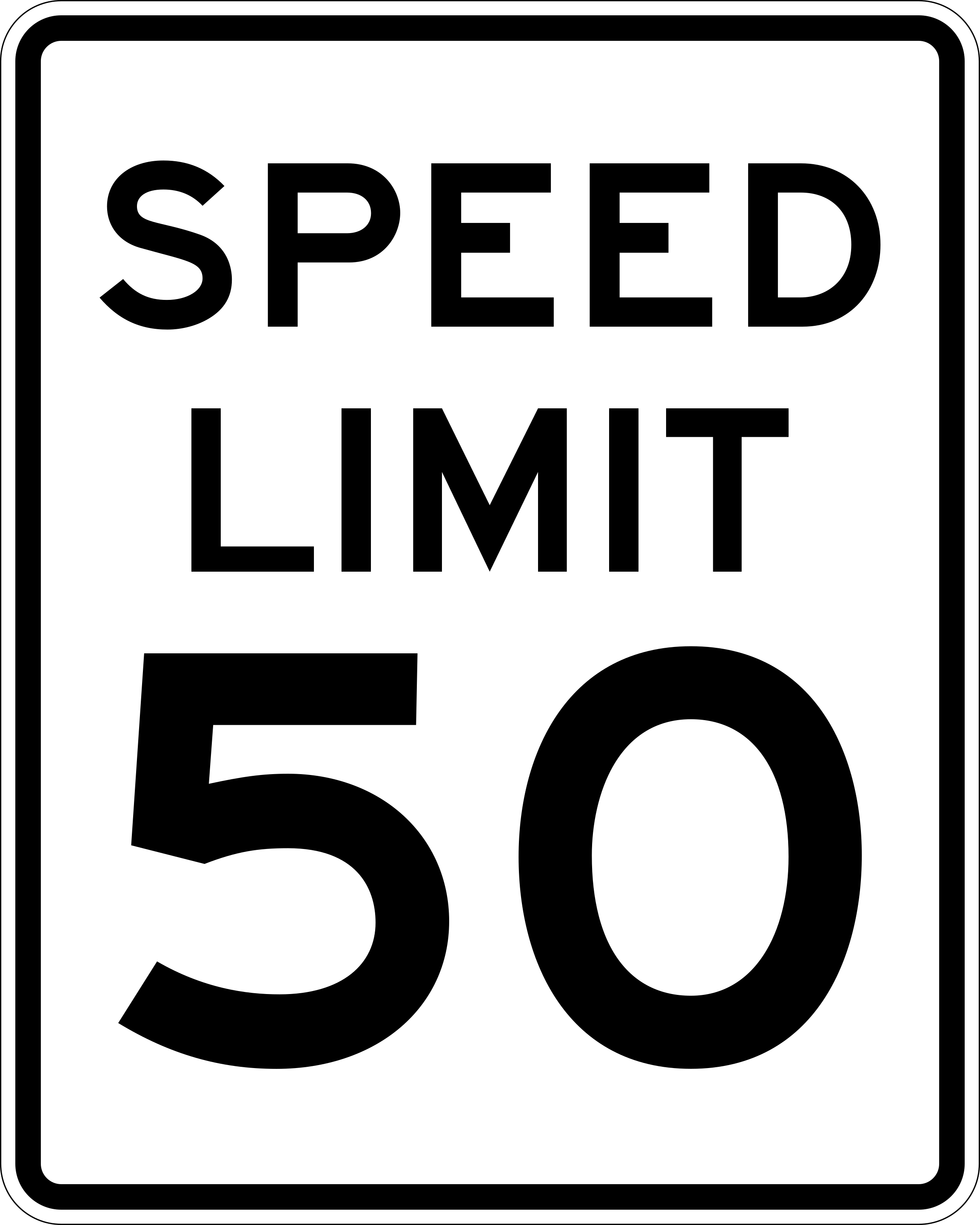
Respuesta correcta: Puede ser adecuada para un automóvil y aun así ser demasiado rápida para una unidad cargada
Las velocidades de las rampas se fijan pensando en los automóviles. Una cifra adecuada para un vehículo de pasajeros puede seguir siendo demasiado alta para una unidad alta y pesada, y una rampa que baja mientras describe una curva es todavía peor.