Vermont Car / Permit practice
Vermont Car / Permit: Road Signs practice test
Learn the shapes, colors, and meanings of regulatory, warning, and guide signs — from stop and yield to construction and school-zone signs.
Content reviewed against official driver handbooks · August 12, 2026
14 questions · pass with 11 correct. You get instant feedback and an explanation after every answer.
Choose your level
Up to 20 questions on this topic, with feedback after every answer.
Study questions with answers
12 sample Road Signs questions with the correct answer, a short explanation, and the official handbook reference. Read through them, then take the quiz above.
Show all 12 questions with answers
1. What should you do on a stretch of highway posted with deer and moose crossing signs?

Correct answer: Watch for animals and drive with added care, especially at night and around dawn
Those signs mark places where large animals cross, and moose and deer move most often from late evening through the night and into the early morning.
Source: Vermont Driver's Manual — Chapter 7, Moose and Deer Safety
2. A rectangular sign with a white background tells a driver what?
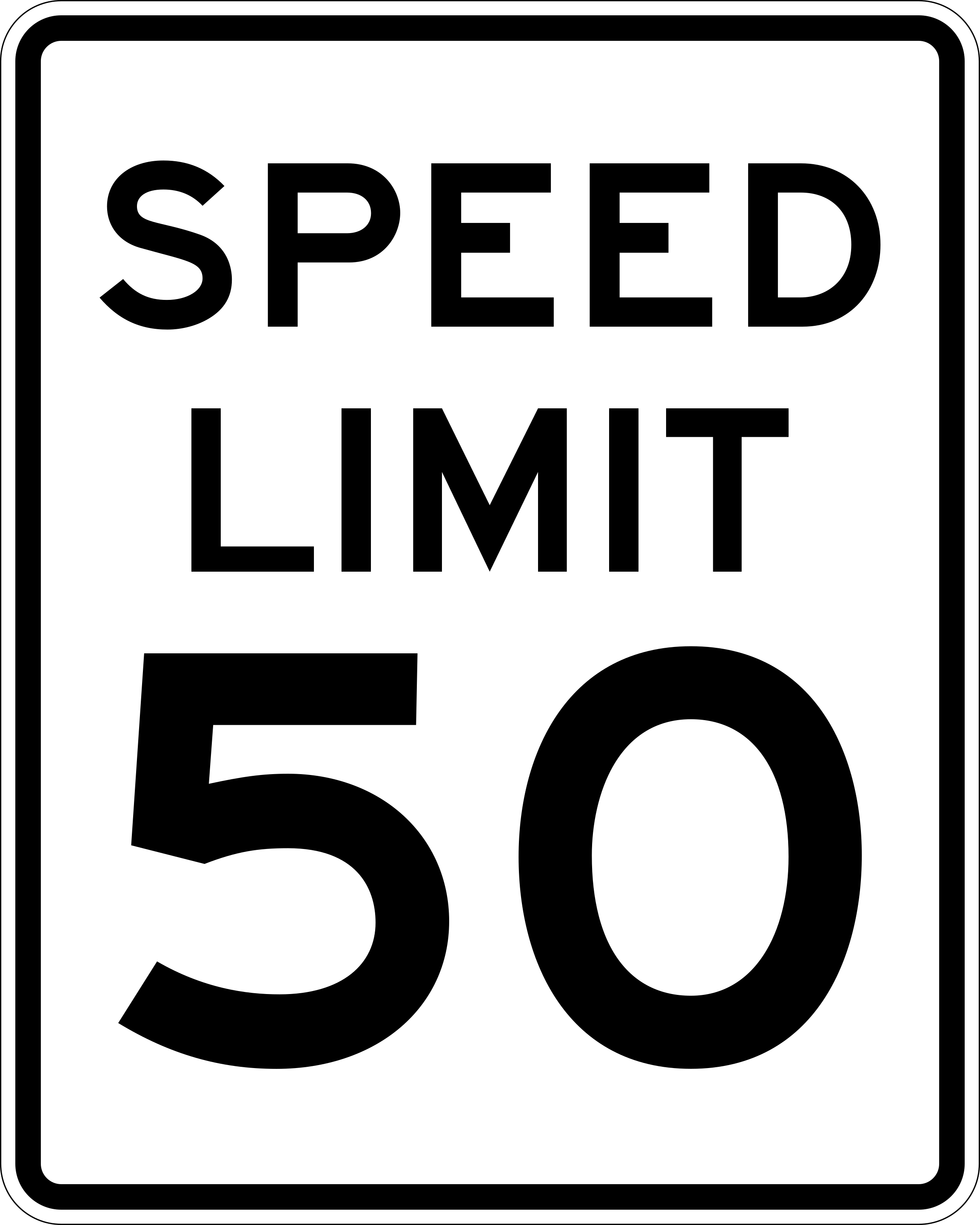
Correct answer: A rule that must be followed, such as a speed limit or a passing restriction
White rectangles are regulatory: they set out what a driver is required to do or forbidden to do, including posted speeds and rules on turning and passing.
Source: Vermont Driver's Manual — Chapter 7, Regulatory Signs
3. Where does Vermont require you to stop when you reach a stop sign?
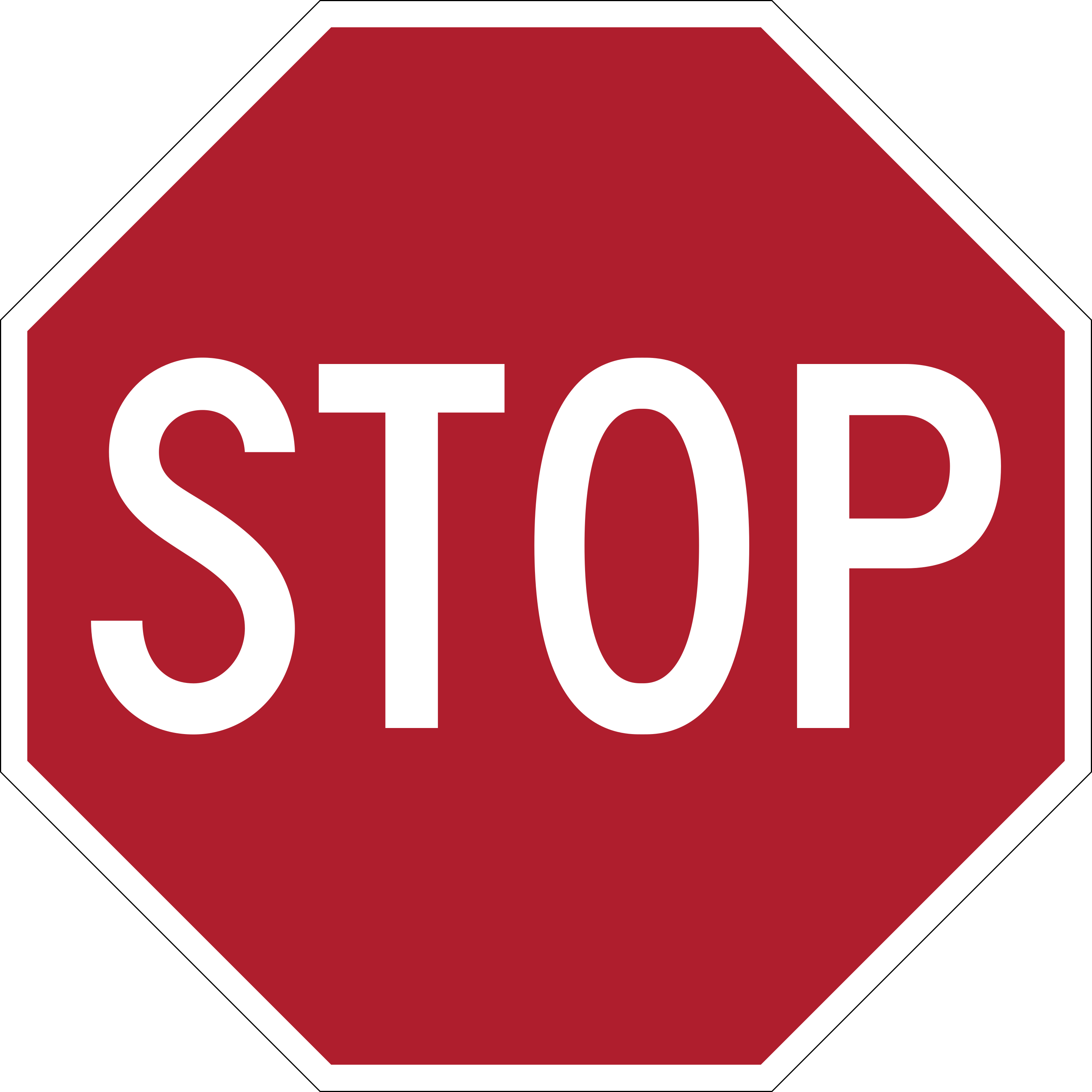
Correct answer: At the stop line, a crosswalk, or the edge of the crossing road, whichever you meet first
The stop must come before the first of these you reach: a painted line, a crosswalk that may be marked or unmarked, or the road you are entering.
Source: Vermont Driver's Manual — Chapter 7, Road Signs
4. Snow has covered the wording on a sign with eight sides. What must you do?
Correct answer: Come to a full stop, check the intersection, give way as required, then go
An eight-sided outline belongs only to the stop sign, so a driver who cannot read the wording still knows to halt, check for cross traffic, and give way before going on.
Source: Vermont Driver's Manual — Chapter 7, Road Signs
5. A round sign carrying a large X and two R letters stands beside the road. What is ahead?

Correct answer: A set of railroad tracks crossing the road
Circular advance signs lettered with an X and RR warn drivers that train tracks cross the roadway a short distance farther on.
Source: Vermont Driver's Manual — Chapter 7, Road Signs
6. You find a hazard blocking a railroad crossing that has a sign listing a telephone number. What should you report along with the problem?
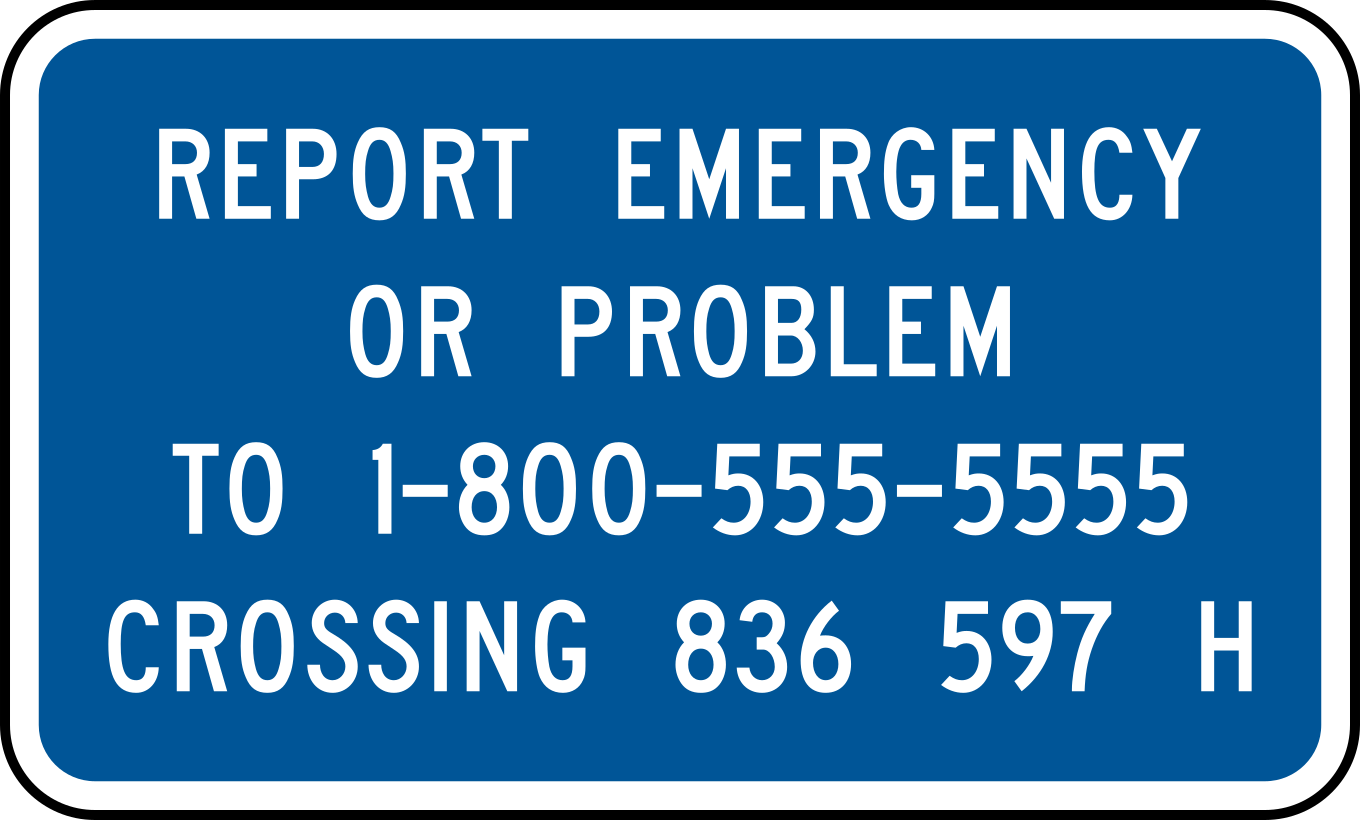
Correct answer: The crossing number shown on the sign
Calling that number lets the railroad halt or reroute trains, and quoting the posted crossing number tells them exactly which location is unsafe.
Source: Vermont Driver's Manual — Chapter 7, Rules of the Road at Railroad Crossings
7. What do the small signs mounted under a crossbuck tell you?
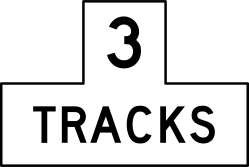
Correct answer: How many sets of tracks you must cross
A plate beneath the crossbuck counts the tracks at that crossing, which matters because one train can screen another coming the opposite way.
Source: Vermont Driver's Manual — Chapter 7, Road Signs
8. What does a sign shaped like an upside-down triangle require of you?
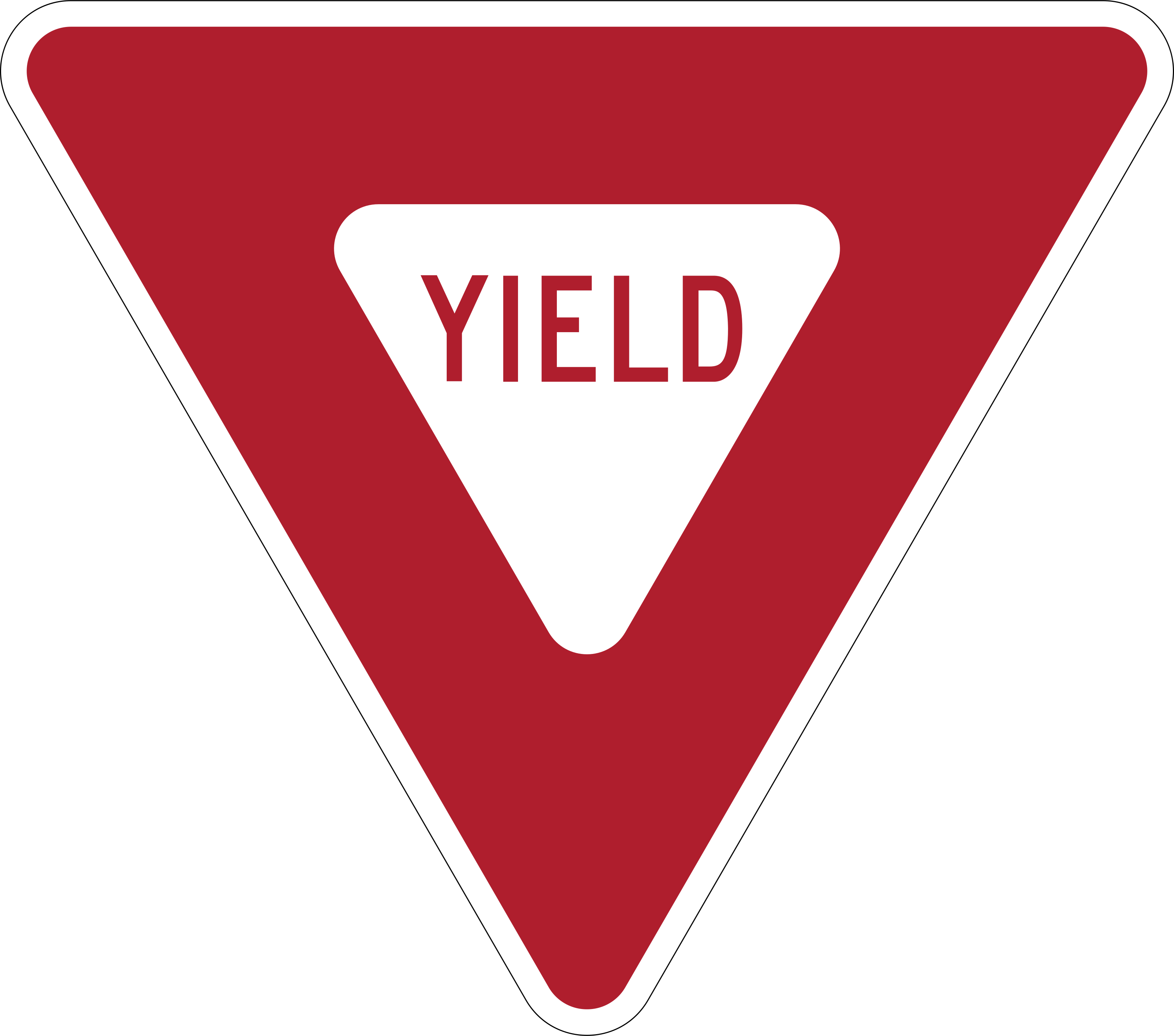
Correct answer: Reduce speed, look carefully, and go on only when nothing is in your path
That triangular outline marks a yield: reduce speed, search for people on foot, bicyclists and vehicles, and move ahead only when the way is open.
Source: Vermont Driver's Manual — Chapter 7, Road Signs
9. A school zone speed limit sign reads "when children are present." What does that phrase mean for you?
Correct answer: The lower limit is in force whenever children are around, including after regular class hours
Wording of that kind tells you when the reduced limit applies, and children gather at schools for evening and weekend events as well as for classes.
Source: Vermont Driver's Manual — Chapter 7, School Zones
10. You come up behind a tractor displaying a triangular orange and red emblem. What does that emblem tell you?
Correct answer: The vehicle cannot keep up with normal traffic speeds
The orange and red triangle is mounted on machinery that travels well below highway speed, giving following drivers early notice to ease off.
Source: Vermont Driver's Manual — Chapter 7, Road Signs
11. Some warning signs carry an extra message such as a distance or a suggested speed. Why?
Correct answer: To tell drivers how far the hazard continues or how fast is safe
Extra wording on a warning sign spells out the safe speed or the stretch of road a hazard covers, such as a deer crossing that runs for the next few miles.
Source: Vermont Driver's Manual — Chapter 7, Warning Signs
12. In Vermont, what shape and colors mark most signs warning of a hazard on the road?
Correct answer: A diamond that is yellow or green
Signs warning of danger are normally diamond shaped and colored yellow or green, and they tell a driver to slow down.
Source: Vermont Driver's Manual — Chapter 7, Warning Signs
More Car / Permit topics
Practice Road Signs in another state
Every Vermont question is written from the official Vermont driver handbook and checked against its current edition. DMV Test Free is a free, independent study resource — not affiliated with any DMV or government agency. About DMV Test Free