Louisiana Motorcycle practice
Louisiana Motorcycle: Road Signs practice test
Learn the shapes, colors, and meanings of regulatory, warning, and guide signs — from stop and yield to construction and school-zone signs.
Content reviewed against official driver handbooks · August 12, 2026
11 questions · pass with 9 correct. You get instant feedback and an explanation after every answer.
Study questions with answers
11 sample Road Signs questions with the correct answer, a short explanation, and the official handbook reference. Read through them, then take the quiz above.
Show all 11 questions with answers
1. A triangular sign turned so that its point faces sideways is used for what purpose?
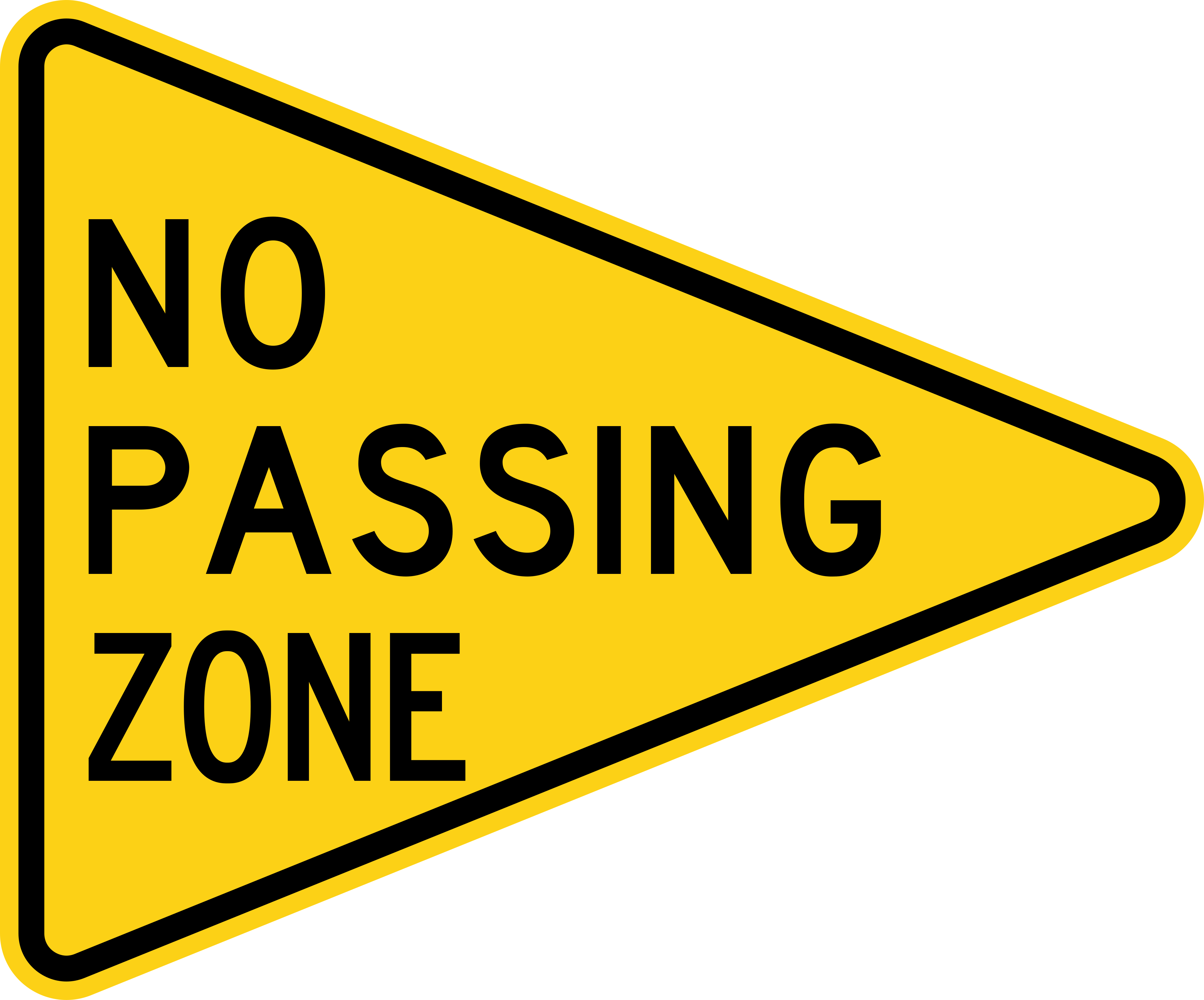
Correct answer: Marking a no-passing zone
A yield sign has its point down; the shape turned so the point aims to the side is reserved for marking stretches where overtaking is not allowed.
Source: Louisiana Class D & E Driver's Guide, Ch. 3 - Sign Shapes
2. A sign warning of several bends in a row tells the motorcyclist to expect:

Correct answer: Multiple curves, one after another
The manual tells riders to notice whether a curve stays constant, tightens, widens, or involves multiple turns, so a series sign means several linked curves ahead.
Source: Louisiana Motorcycle Operator Manual - Crash Avoidance (Cornering)
3. What is a driver being told by a sign that reads PASS WITH CARE?
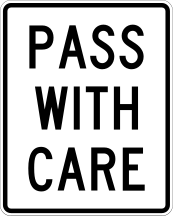
Correct answer: The no-passing zone has ended, so overtake only when it is safe
This regulatory sign marks the finish of a stretch where overtaking was prohibited, so passing becomes legal again but only when conditions make it safe.
Source: Louisiana Class D & E Driver's Guide, Ch. 3 - Regulatory Signs
4. A brown background on a Louisiana guide sign directs you toward what?

Correct answer: A place of recreational or cultural interest
Brown is the background the guide reserves for signs leading to parks, historic sites and similar attractions.
Source: Louisiana Class D & E Driver's Guide, Ch. 3 - Sign Colors
5. Why should a rider study warning signs and pavement markings well before reaching them?
Correct answer: To anticipate hazards early and plan a safe response
The Evaluate step of SEE uses these devices to anticipate problems early, giving the rider time to plan and keep a margin of safety.
Source: Louisiana Motorcycle Operator Manual - SEE Strategy (Evaluate)
6. Fluorescent yellow-green is used as the background for warning signs about which road users?
Correct answer: People on foot, cyclists and school areas
The guide assigns this bright yellow-green shade to walking, cycling and school warning signs so they stand apart from ordinary amber warnings.
Source: Louisiana Class D & E Driver's Guide, Ch. 3 - Sign Colors
7. The manual reminds riders that a pass may be completed only:
Correct answer: Where permitted by signs and markings and within the speed limit
A pass must stay within the posted speed limit and may be made only where signs and markings allow it, so knowing your signs and road markings matters.
Source: Louisiana Motorcycle Operator Manual - Passing and Being Passed
8. Louisiana uses a fluorescent pink background on which category of highway sign?
Correct answer: Signs covering an unplanned event such as a crash closure or evacuation
Bright pink backgrounds are set aside for incident management — a wreck, a storm evacuation or another unplanned closure — so drivers notice the temporary change.
Source: Louisiana Class D & E Driver's Guide, Ch. 3 - Incident Signs
9. When a warning sign shows that the road ahead keeps getting tighter as it bends, riders should treat it as which kind of curve?
Correct answer: A decreasing-radius curve
The manual groups curves by how they change; a curve that keeps tightening is a decreasing-radius curve, and a rider must be ready for the bend to sharpen partway through.
Source: Louisiana Motorcycle Operator Manual - Crash Avoidance (Cornering)
10. A curve-warning sign showing a road that gradually opens up as it turns indicates what type of curve?
Correct answer: A widening curve
A curve whose radius grows larger through the bend is described as a widening curve, one of the curve shapes the manual tells riders to read in advance.
Source: Louisiana Motorcycle Operator Manual - Crash Avoidance (Cornering)
11. Under the SEE strategy, traffic signals, warning signs, and pavement markings all fall into which category a rider must think about?
Correct answer: Traffic control devices
These items are all traffic control devices, and the Evaluate step tells riders to study the circumstances such devices signal before reacting.
Source: Louisiana Motorcycle Operator Manual - SEE Strategy (Evaluate)
More Motorcycle topics
Practice Road Signs in another state
Every Louisiana question is written from the official Louisiana driver handbook and checked against its current edition. DMV Test Free is a free, independent study resource — not affiliated with any DMV or government agency. About DMV Test Free