Examen de práctica del DMV de Kentucky: Automóvil / Permiso, gratis 2026
El examen de conocimiento Automóvil / Permiso de Kentucky tiene ~40 preguntas y necesitas ~32 correctas (80%) para aprobar. Practica gratis con preguntas escritas del manual oficial del conductor de Kentucky — cada una con una explicación clara, y puedes repetirlo cuantas veces quieras sin registrarte.
Contenido revisado con los manuales oficiales del conductor · 12 de agosto de 2026
Qué incluye el examen escrito de Kentucky
El examen de conocimiento Automóvil / Permiso de Kentucky tiene ~40 preguntas; necesitas ~32 correctas (80%) para aprobar.
Basado en el formato oficial del examen de Kentucky: confirma siempre los detalles vigentes con el DMV de tu estado.
Practica por tema
Concéntrate en un área a la vez: cada tema tiene su propio conjunto de preguntas de práctica de Kentucky.
Aprende las formas, los colores y los significados de las señales reglamentarias, de advertencia y de guía: desde alto y ceda el paso hasta señales de construcción y de zona escolar.
Límites de velocidad, reglas para girar y señalizar, requisitos de luces y cinturón, y las leyes cotidianas que todo conductor debe cumplir.
Cómo interpretar los semáforos, las líneas de carril y las marcas del pavimento, incluidas las líneas amarillas y blancas, las flechas y las luces intermitentes.
Quién pasa primero en intersecciones, cruces de cuatro vías, glorietas y pasos peatonales, y cómo ceder el paso a peatones y vehículos de emergencia.
Distancia de seguimiento, exploración visual, puntos ciegos, uso de las luces y los hábitos que evitan choques y te mantienen en control.
Conducir con seguridad cerca de motocicletas, bicicletas, camiones grandes, peatones y autobuses escolares, y saber quién tiene la prioridad.
Límites de alcohol en la sangre, leyes de tolerancia cero y consentimiento implícito, y cómo el alcohol y las drogas —legales o no— afectan tu conducción.
Estacionamiento legal e ilegal, colores de las aceras, distancias respecto a hidrantes y cruces, y cómo estacionar con seguridad en pendientes.
Elegir una velocidad segura, mantener un colchón de espacio, ajustarte al clima y al tráfico, y entender la distancia de frenado.
Qué hacer cuando algo sale mal: fallo de frenos, reventones de llantas, derrapes y quedarse parado sobre las vías del tren.
El sistema de puntos, la suspensión de la licencia, las reglas de la licencia provisional, los requisitos de seguro y otros aspectos básicos de la licencia.
Cómo aprobar a la primera
- Lee el manual oficial del conductor de Kentucky al menos una vez antes del examen.
- Practica por tema para encontrar tus puntos débiles y corrígelos.
- Haz exámenes completos de práctica hasta aprobar con comodidad cada vez.
- Lee cada explicación: entender es mejor que memorizar.
Examen Automóvil / Permiso de Kentucky — preguntas frecuentes
¿Cuántas preguntas tiene el examen Automóvil / Permiso de Kentucky?
El examen escrito Automóvil / Permiso de Kentucky tiene ~40 preguntas y necesitas ~32 correctas (80%) para aprobar. Nuestros exámenes de práctica reflejan ese formato.
¿Cuántas preguntas puedo fallar en el examen Automóvil / Permiso de Kentucky?
Puedes fallar hasta ~8 de las ~40 preguntas y aún aprobar — necesitas ~32 correctas, que es el 80%.
¿Puedo repetir el examen de práctica?
Sí: practica cuantas veces quieras, totalmente gratis. Las preguntas y las opciones de respuesta se mezclan cada vez.
¿Puedo hacer el examen de práctica de Kentucky en español?
Sí. Aquí cada pregunta está disponible en inglés y español — cambia de idioma cuando quieras. Muchos estados también ofrecen el examen real en otros idiomas además del inglés; confirma qué ofrece Kentucky con tu DMV.
¿Puedo practicar en mi teléfono?
Sí. Los exámenes de práctica funcionan en cualquier navegador móvil o de escritorio — sin app ni registro — para que estudies donde sea.
¿Son estas las preguntas reales del examen del DMV?
No. Nuestras preguntas son originales, escritas a partir del manual oficial vigente del conductor de Kentucky para reflejar los temas y el estilo del examen real. No estamos afiliados a ningún DMV ni agencia gubernamental.
¿Cuál es la mejor manera de estudiar?
Lee el manual del conductor de Kentucky, practica por tema para reforzar tus áreas débiles y termina con exámenes completos hasta aprobar de forma constante.
Otros exámenes de práctica de Kentucky
Haz el examen Automóvil / Permiso en otro estado
Cada pregunta de Kentucky se escribe a partir del manual oficial del conductor de Kentucky y se verifica con su edición vigente. DMV Test Free es un recurso de estudio gratuito e independiente, sin afiliación con ningún DMV o agencia gubernamental. Acerca de DMV Test Free
Preguntas del examen Automóvil / Permiso de Kentucky con respuestas
20 preguntas de ejemplo del banco de preguntas Automóvil / Permiso de Kentucky, cada una con la respuesta correcta, una breve explicación y la sección del manual oficial de la que proviene.
Ver las 20 preguntas con respuestas
1. ¿Por qué nunca debe detener su vehículo sobre un cruce de ferrocarril?
Respuesta correcta: Detenerse ahí es muy peligroso si se aproxima un tren
Nunca entre a un cruce sin espacio para despejarlo; detenerse sobre las vías es extremadamente peligroso si se aproxima un tren.
Fuente: Manual del Conductor de Kentucky — Señales de Cruce de Ferrocarril
2. ¿Qué distancia de seguimiento debe mantener detrás de una motocicleta?
Respuesta correcta: Al menos cuatro segundos, y más cuando está mojado
Deje un intervalo mínimo de cuatro segundos detrás de una motocicleta, aumentándolo en condiciones de piso mojado, ya que los motociclistas pueden reducir la velocidad o cambiar de carril rápidamente.
3. En un área pública de estacionamiento fuera de la vía, ¿cuál es la velocidad máxima permitida?
Respuesta correcta: Quince millas por hora
Kentucky establece un límite de 15 mph en las instalaciones de estacionamiento fuera de la vía ofrecidas para uso público.
Fuente: Manual del Conductor de Kentucky — Manejo de la Velocidad
4. Según el manual, ¿cómo se describe mejor una distracción?
Respuesta correcta: Cualquier cosa que aparte su atención de la conducción
Una distracción es cualquier cosa que aparta su atención de la tarea de conducir, ya sea visual, manual o mental.
Fuente: Manual del Conductor de Kentucky — Distracciones del Conductor
5. No mantener el seguro requerido en un vehículo registrado puede resultar en ¿qué?
Respuesta correcta: Una multa, posible tiempo de cárcel y la revocación del registro
Es un delito que puede conllevar una multa, hasta 90 días de cárcel y la revocación del registro del vehículo.
6. ¿Dónde es más probable que un conductor encuentre una señal de "Sentido Contrario"?
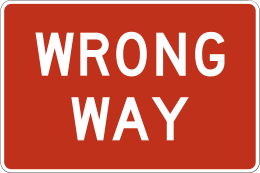
Respuesta correcta: En una rampa de salida o al inicio de una calle de un solo sentido a la que se ingresa de forma incorrecta
La señal de Sentido Contrario aparece en las rampas de salida y en las calles de un solo sentido para advertir a un conductor que va en contra del tránsito que se detenga y dé la vuelta.
Fuente: Manual del Conductor de Kentucky — Señales Reglamentarias
7. Al acercarse a una rotonda, ¿quién tiene el derecho de paso?
Respuesta correcta: El tránsito que ya circula dentro de la rotonda
Los conductores que ingresan deben ceder el paso al tránsito que ya circula en sentido antihorario dentro de la rotonda.
Fuente: Manual del Conductor de Kentucky — Rotondas y Glorietas
8. ¿Qué significa la señal de una flecha roja?
Respuesta correcta: Que no debe girar en esa dirección hasta que cambie
Una flecha roja prohíbe girar en la dirección de la flecha hasta que la señal cambie a verde.
Fuente: Manual del Conductor de Kentucky — Flechas Iluminadas
9. Si el motor se apaga mientras conduce, ¿qué debe esperar y hacer?
Respuesta correcta: El volante costará más girar, pero mantenga un agarre firme y salga de la vía
La dirección se vuelve más dura sin la asistencia del motor, pero aún puede girar; frene de forma constante, oríllese y luego intente arrancarlo de nuevo.
10. ¿A qué nivel de alcohol dice el manual que la visión comienza a verse afectada en todos los conductores?
Respuesta correcta: 0.02 de alcohol en la sangre
La visión, el sentido más importante para conducir, ya se ve afectada con un contenido de alcohol en la sangre de 0.02.
Fuente: Manual del Conductor de Kentucky — Efectos del Alcohol y Otras Drogas que Causan Deterioro
11. El manual indica que el tiempo de reacción de un conductor alerta promedio es de aproximadamente ¿cuánto?
Respuesta correcta: De tres cuartos de segundo a un segundo
El tiempo de reacción de un conductor alerta promedia aproximadamente entre tres cuartos de segundo y un segundo, el tiempo de pasar del acelerador al freno.
Fuente: Manual del Conductor de Kentucky — Distancia de Frenado
12. Debe estacionar en una pendiente donde no hay borde de acera. ¿Qué debe hacer con las ruedas?
Respuesta correcta: Girarlas de modo que el vehículo ruede fuera de la vía si se moviera
Sin borde de acera, gire las ruedas de modo que, si el vehículo rodara, se dirija fuera de la vía en lugar de hacia el tránsito.
Fuente: Manual del Conductor de Kentucky — Estacionar en una Pendiente
13. El gran punto ciego directamente detrás de un camión grande puede extenderse ¿aproximadamente cuánto?
Respuesta correcta: Hasta doscientos pies
El punto ciego trasero de un camión grande llega hasta 200 pies; si lo sigue tan de cerca, el conductor no puede verlo y usted no puede ver hacia adelante.
Fuente: Manual del Conductor de Kentucky — La Zona Ciega (No Zone)
14. ¿Cómo se hace cumplir el requisito del cinturón de seguridad en Kentucky?
Respuesta correcta: Como una infracción primaria, así que un agente puede detenerlo únicamente por eso
La ley del cinturón es de aplicación primaria en Kentucky, así que un agente puede detener a un conductor solo por no llevar puesto el cinturón de seguridad.
Fuente: Manual del Conductor de Kentucky — Uso de los Cinturones de Seguridad
15. ¿Dónde debe colocar ambas manos un conductor en el volante de un vehículo con bolsas de aire?
Respuesta correcta: En las posiciones de las tres y las nueve en punto
Ahora se recomiendan las posiciones de las 3 y las 9 en punto porque el antiguo agarre de las 10 y las 2 puede ser peligroso cuando se despliega una bolsa de aire.
Fuente: Manual del Conductor de Kentucky — Dirección (Volante)
16. Para un conductor de 18 años o más, acumular ¿cuántos puntos en dos años puede dar lugar a una audiencia de suspensión?
Respuesta correcta: Doce puntos
Alcanzar 12 puntos en un período de dos años (7 si es menor de 18) puede resultar en una audiencia y una posible suspensión.
Fuente: Manual del Conductor de Kentucky — El Sistema de Puntos de Kentucky
17. Una señal que indica un carril central compartido para giros a la izquierda, ¿cómo indica que puede usarse el carril?
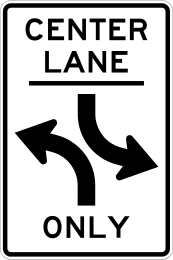
Respuesta correcta: Solo por vehículos de cualquier dirección que se preparan para girar a la izquierda
El carril central compartido para giros a la izquierda está reservado para los vehículos que giran a la izquierda desde cualquier dirección y no debe usarse para rebasar ni para circular de paso.
Fuente: Manual del Conductor de Kentucky — Señales Reglamentarias
18. Antes de completar un giro a la izquierda en una intersección, ¿a quién debe ceder el paso?
Respuesta correcta: Al tránsito que viene de frente, incluidos los vehículos que giran a la derecha
Un conductor que gira a la izquierda debe ceder el paso al tránsito en sentido contrario, lo que incluye a los vehículos del otro sentido que giran a la derecha.
Fuente: Manual del Conductor de Kentucky — Ceder el Derecho de Paso
19. Cuando una señal o un semáforo le exige detenerse, ¿dónde debe quedar detenido el vehículo?
Respuesta correcta: Detrás de la línea de alto, el cruce peatonal o la señal
Debe detenerse detrás de la línea de alto marcada o del cruce peatonal; si hay una línea de alto antes del cruce peatonal, obedézcala primero.
Fuente: Manual del Conductor de Kentucky — Cruces Peatonales y Líneas de Alto
20. Mientras espera ayuda médica en un choque, ¿cómo puede asistir a una persona herida?
Respuesta correcta: Mantenerla abrigada con una manta o un abrigo
Mueva a alguien solo en una situación de peligro de muerte; de lo contrario, espere a los servicios médicos de emergencia y mantenga a la víctima abrigada y tranquila.
Fuente: Manual del Conductor de Kentucky — Primeros Auxilios a las Víctimas de Choques