New Jersey Motorcycle practice
New Jersey Motorcycle: Road Signs practice test
Learn the shapes, colors, and meanings of regulatory, warning, and guide signs — from stop and yield to construction and school-zone signs.
Content reviewed against official driver handbooks · August 12, 2026
12 questions · pass with 10 correct. You get instant feedback and an explanation after every answer.
Choose your level
Up to 20 questions on this topic, with feedback after every answer.
Study questions with answers
12 sample Road Signs questions with the correct answer, a short explanation, and the official handbook reference. Read through them, then take the quiz above.
Show all 12 questions with answers
1. White letters or symbols on a blue panel give a driver what kind of information?
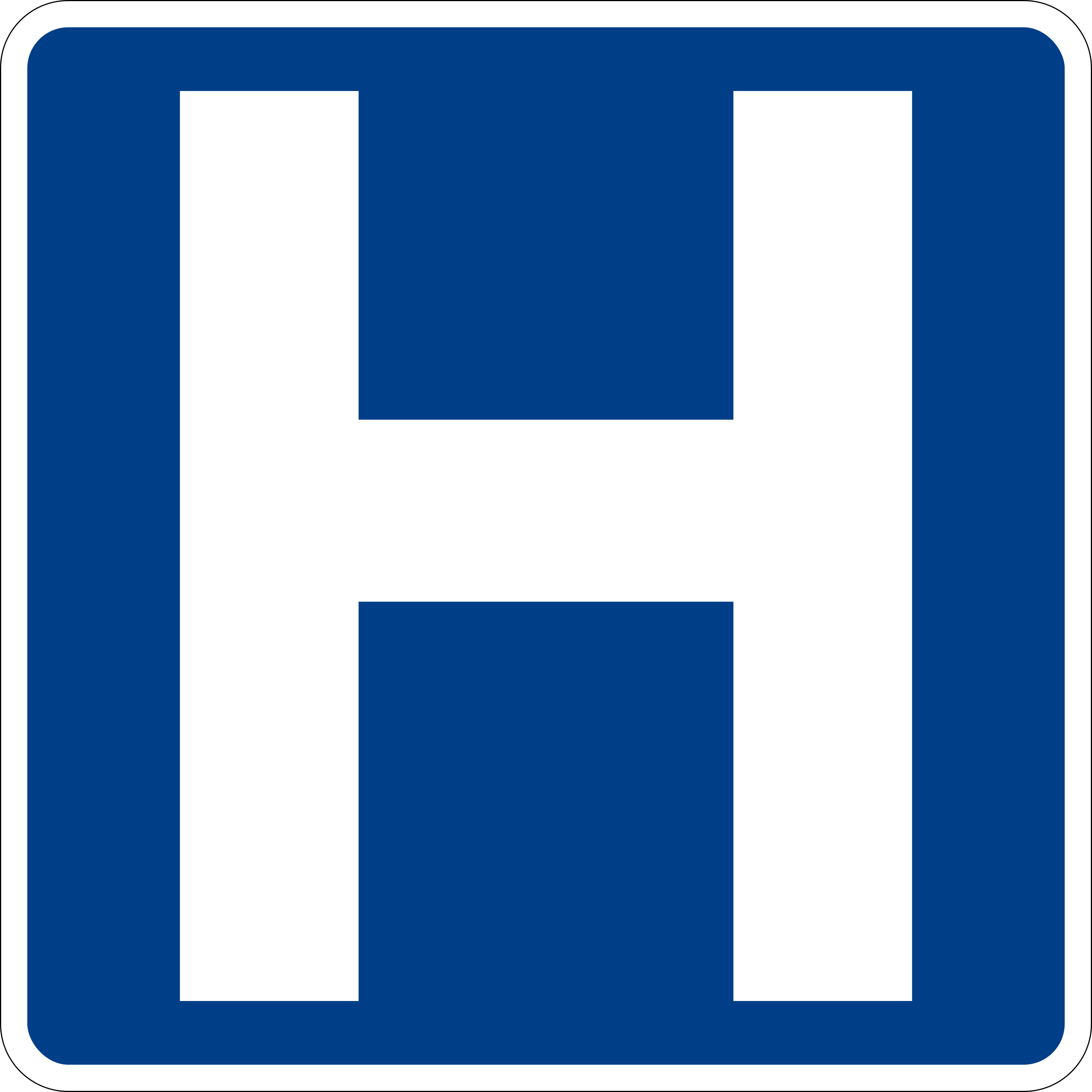
Correct answer: Services available to motorists
Blue is the background for motorist service signs, which point toward services rather than regulating traffic or warning of a hazard.
2. A yellow three-sided pennant beside the roadway warns of what?
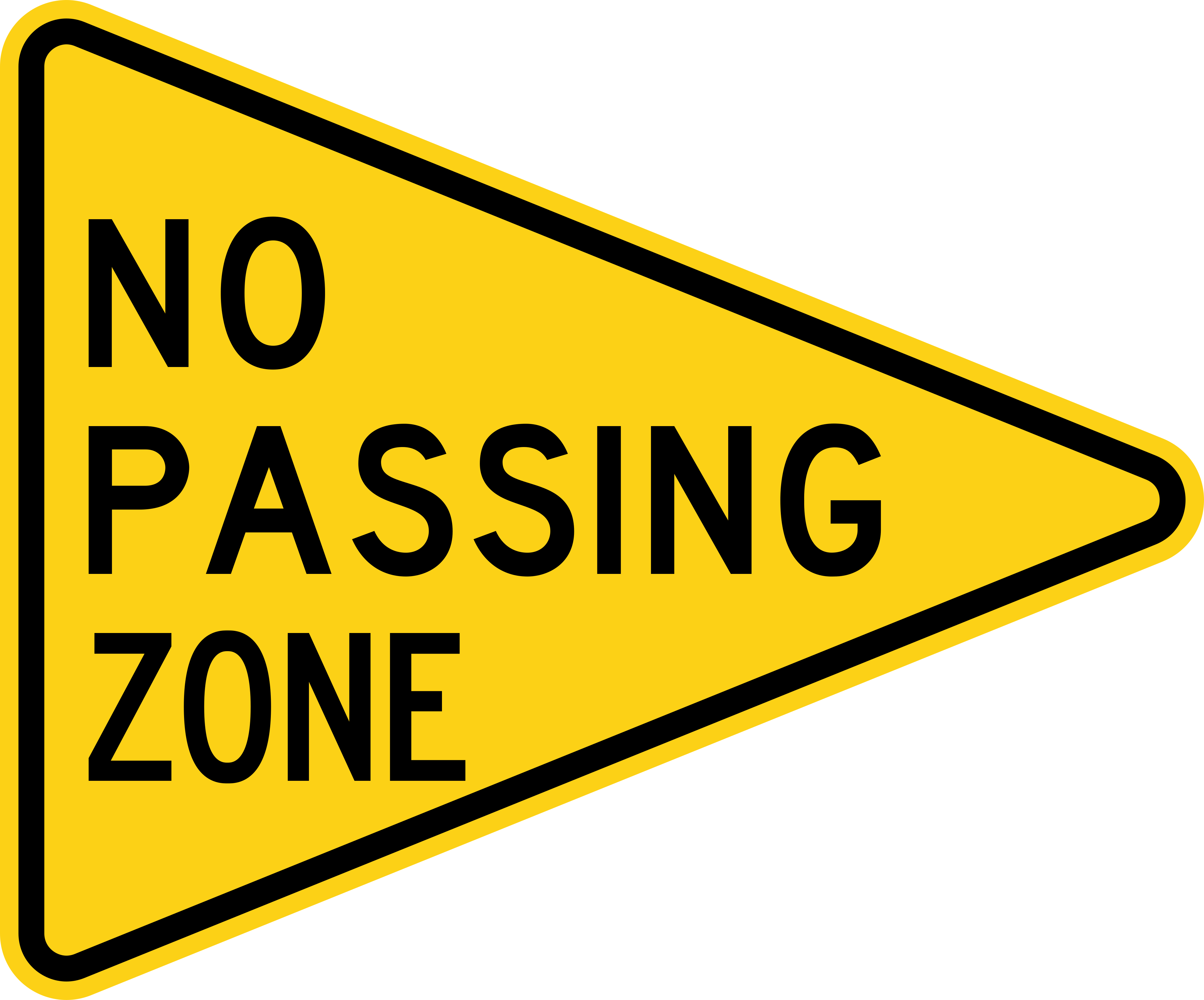
Correct answer: A stretch where passing is prohibited
The pennant shape on yellow is the marker New Jersey uses to warn that passing is not permitted.
3. An orange diamond-shaped sign beside the road means what?
Correct answer: Temporary road work conditions lie ahead
Orange diamonds flag temporary conditions in a work area, among them closed or shifted lanes, flaggers, rough pavement, and detours.
4. What does a five-sided yellow sign tell a driver?

Correct answer: This is a school area
Five sides on a yellow background identify the school signs used throughout the state.
5. What duty does the X-shaped sign at a railroad crossing place on a driver?
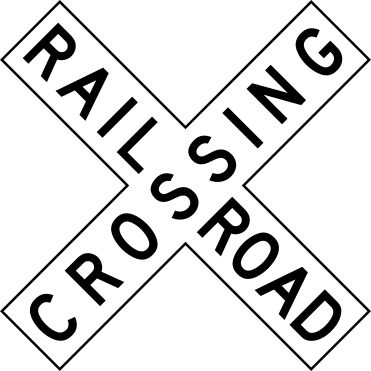
Correct answer: The same duty as a yield sign, always giving way to trains
A crossbuck carries the same weight as a yield sign, and because a train cannot steer aside, the driver always lets it go first.
6. On a wet curve, how should you treat the posted curve speed?
Correct answer: Ride slower than posted, since it assumes dry pavement
Because posted curve speeds assume dry pavement, reduce your speed below the posted limit on a wet curve.
Source: New Jersey Motorcycle Manual — Handling Dangerous Surfaces
7. Speed limits posted for curves apply to what conditions?
Correct answer: Good, dry surface conditions
Speed limits posted on curves are set for good, dry surface conditions.
Source: New Jersey Motorcycle Manual — Handling Dangerous Surfaces
8. Which background color is used for signs that guide you toward a destination?
Correct answer: Green
Green rectangles handle direction guidance, while brown ones are set aside for parks, recreation, and scenic points.
9. Among New Jersey's standard sign shapes, which sign has only three sides?
Correct answer: The yield sign
Three sides belong to the yield sign; stop signs carry eight, school signs five, and the railroad crossbuck is shaped like an X.
10. What do most warning signs in New Jersey look like?
Correct answer: Yellow diamonds carrying a black symbol or wording
Hazards such as deer crossings, curves, school crossings, and railroad crossings are announced by diamond-shaped yellow panels printed in black.
11. Which sign shape is reserved in New Jersey for STOP signs alone?
Correct answer: An eight-sided octagon
New Jersey saves the eight-sided red shape for stop signs, so no other sign uses it.
12. A bright orange triangular emblem on the back of a vehicle tells you what?
Correct answer: The vehicle moves slowly
Equipment used in farming and construction must display a reflective orange triangle on public roads so drivers coming up behind know the vehicle travels slowly.
More Motorcycle topics
Practice Road Signs in another state
Every New Jersey question is written from the official New Jersey driver handbook and checked against its current edition. DMV Test Free is a free, independent study resource — not affiliated with any DMV or government agency. About DMV Test Free