Examen de práctica del DMV de Colorado: Automóvil / Permiso, gratis 2026
El examen de conocimiento Automóvil / Permiso de Colorado tiene ~25 preguntas y necesitas ~20 correctas (80%) para aprobar. Practica gratis con preguntas escritas del manual oficial del conductor de Colorado — cada una con una explicación clara, y puedes repetirlo cuantas veces quieras sin registrarte.
Contenido revisado con los manuales oficiales del conductor · 12 de agosto de 2026
Qué incluye el examen escrito de Colorado
El examen de conocimiento Automóvil / Permiso de Colorado tiene ~25 preguntas; necesitas ~20 correctas (80%) para aprobar.
Basado en el formato oficial del examen de Colorado: confirma siempre los detalles vigentes con el DMV de tu estado.
Practica por tema
Concéntrate en un área a la vez: cada tema tiene su propio conjunto de preguntas de práctica de Colorado.
Aprende las formas, los colores y los significados de las señales reglamentarias, de advertencia y de guía: desde alto y ceda el paso hasta señales de construcción y de zona escolar.
Límites de velocidad, reglas para girar y señalizar, requisitos de luces y cinturón, y las leyes cotidianas que todo conductor debe cumplir.
Cómo interpretar los semáforos, las líneas de carril y las marcas del pavimento, incluidas las líneas amarillas y blancas, las flechas y las luces intermitentes.
Quién pasa primero en intersecciones, cruces de cuatro vías, glorietas y pasos peatonales, y cómo ceder el paso a peatones y vehículos de emergencia.
Distancia de seguimiento, exploración visual, puntos ciegos, uso de las luces y los hábitos que evitan choques y te mantienen en control.
Conducir con seguridad cerca de motocicletas, bicicletas, camiones grandes, peatones y autobuses escolares, y saber quién tiene la prioridad.
Límites de alcohol en la sangre, leyes de tolerancia cero y consentimiento implícito, y cómo el alcohol y las drogas —legales o no— afectan tu conducción.
Estacionamiento legal e ilegal, colores de las aceras, distancias respecto a hidrantes y cruces, y cómo estacionar con seguridad en pendientes.
Elegir una velocidad segura, mantener un colchón de espacio, ajustarte al clima y al tráfico, y entender la distancia de frenado.
Qué hacer cuando algo sale mal: fallo de frenos, reventones de llantas, derrapes y quedarse parado sobre las vías del tren.
El sistema de puntos, la suspensión de la licencia, las reglas de la licencia provisional, los requisitos de seguro y otros aspectos básicos de la licencia.
Cómo aprobar a la primera
- Lee el manual oficial del conductor de Colorado al menos una vez antes del examen.
- Practica por tema para encontrar tus puntos débiles y corrígelos.
- Haz exámenes completos de práctica hasta aprobar con comodidad cada vez.
- Lee cada explicación: entender es mejor que memorizar.
Examen Automóvil / Permiso de Colorado — preguntas frecuentes
¿Cuántas preguntas tiene el examen Automóvil / Permiso de Colorado?
El examen escrito Automóvil / Permiso de Colorado tiene ~25 preguntas y necesitas ~20 correctas (80%) para aprobar. Nuestros exámenes de práctica reflejan ese formato.
¿Cuántas preguntas puedo fallar en el examen Automóvil / Permiso de Colorado?
Puedes fallar hasta ~5 de las ~25 preguntas y aún aprobar — necesitas ~20 correctas, que es el 80%.
¿Puedo repetir el examen de práctica?
Sí: practica cuantas veces quieras, totalmente gratis. Las preguntas y las opciones de respuesta se mezclan cada vez.
¿Puedo hacer el examen de práctica de Colorado en español?
Sí. Aquí cada pregunta está disponible en inglés y español — cambia de idioma cuando quieras. Muchos estados también ofrecen el examen real en otros idiomas además del inglés; confirma qué ofrece Colorado con tu DMV.
¿Puedo practicar en mi teléfono?
Sí. Los exámenes de práctica funcionan en cualquier navegador móvil o de escritorio — sin app ni registro — para que estudies donde sea.
¿Son estas las preguntas reales del examen del DMV?
No. Nuestras preguntas son originales, escritas a partir del manual oficial vigente del conductor de Colorado para reflejar los temas y el estilo del examen real. No estamos afiliados a ningún DMV ni agencia gubernamental.
¿Cuál es la mejor manera de estudiar?
Lee el manual del conductor de Colorado, practica por tema para reforzar tus áreas débiles y termina con exámenes completos hasta aprobar de forma constante.
Otros exámenes de práctica de Colorado
Haz el examen Automóvil / Permiso en otro estado
Cada pregunta de Colorado se escribe a partir del manual oficial del conductor de Colorado y se verifica con su edición vigente. DMV Test Free es un recurso de estudio gratuito e independiente, sin afiliación con ningún DMV o agencia gubernamental. Acerca de DMV Test Free
Preguntas del examen Automóvil / Permiso de Colorado con respuestas
20 preguntas de ejemplo del banco de preguntas Automóvil / Permiso de Colorado, cada una con la respuesta correcta, una breve explicación y la sección del manual oficial de la que proviene.
Ver las 20 preguntas con respuestas
1. Abrir la puerta del auto con la mano más alejada de la puerta —el 'Dutch Reach' o alcance holandés— ayuda al conductor a:
Respuesta correcta: girarse y verificar si se acercan ciclistas antes de abrirla
Usar la mano más cercana al centro del auto gira su cuerpo de forma natural para que mire hacia atrás en busca de ciclistas y tránsito antes de abrir la puerta.
2. Durante el primer año de conducción con licencia de un menor, por lo general no se permite conducir entre:
Respuesta correcta: la medianoche y las 5 a. m.
Durante el primer año, un conductor joven no puede conducir entre la medianoche y las 5 a. m. a menos que lo acompañe un padre, tutor o instructor, con excepciones limitadas para la escuela, el trabajo o las emergencias.
Fuente: Manual del Conductor de Colorado — Conductores menores (Toque de queda)
3. Al seguir a otro vehículo de noche, debe usar las luces bajas si está a menos de:
Respuesta correcta: 200 pies del vehículo de adelante
A menos de 200 pies del vehículo que sigue, use las luces bajas con los faros antiniebla apagados para que su resplandor no moleste al conductor de adelante.
Fuente: Manual del Conductor de Colorado — Conducción nocturna
4. La forma recomendada de verificar el tránsito transversal antes de entrar en una intersección es:
Respuesta correcta: mirar a la izquierda, luego a la derecha y de nuevo a la izquierda
Mire siempre a la izquierda, a la derecha y de nuevo a la izquierda al entrar, cruzar o girar en una intersección, y esté atento también a los usuarios más pequeños de la vía.
Fuente: Manual del Conductor de Colorado — Consejos para una conducción segura (Exploración visual)
5. El área rayada en diagonal junto a un espacio de estacionamiento para personas con discapacidad es:
Respuesta correcta: reservada para el acceso de camionetas, donde nunca se permite estacionarse
Las secciones rayadas junto a los espacios accesibles proporcionan acceso para camionetas y no se puede estacionar en ellas en ningún momento.
6. Antes de dar marcha atrás con su vehículo, debe ceder el paso a:
Respuesta correcta: cualquier vehículo lo bastante cerca como para ser un peligro
Al retroceder debe ceder el paso a todos los vehículos que estén lo bastante cerca como para representar un peligro, y debe revisar detrás del auto antes de empezar.
Fuente: Manual del Conductor de Colorado — Derecho de paso (Marcha atrás)
7. Si rechaza la prueba química requerida, su licencia será revocada por:
Respuesta correcta: un año, más el requisito de un bloqueo de encendido por dos años
Rechazar la prueba conlleva la revocación de la licencia por un año y la obligación de instalar un dispositivo de bloqueo de encendido en cualquier vehículo que conduzca durante dos años.
Fuente: Manual del Conductor de Colorado — Conducir bajo los efectos (Ley de consentimiento expreso)
8. Cuando se aproxima a un semáforo amarillo intermitente, debe:
Respuesta correcta: reducir la velocidad y avanzar con precaución
Una luz amarilla intermitente advierte de un peligro, así que reduzca la velocidad y avance con cuidado sin necesidad de detenerse.
Fuente: Manual del Conductor de Colorado — Semáforos (Luz amarilla intermitente)
9. Una señal con fondo verde por lo general proporciona:
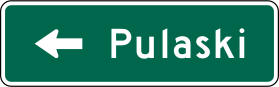
Respuesta correcta: indicaciones y distancia en millas hasta un destino
Las señales guía verdes dan información de orientación, como nombres de rutas, salidas y la distancia hasta un lugar.
Fuente: Manual del Conductor de Colorado — Señales de tránsito (Señales guía)
10. Si sus frenos dejan de funcionar de repente, su primera reacción debe ser:
Respuesta correcta: bombear el pedal del freno para intentar generar presión, y luego usar el freno de estacionamiento
Quite el pie del acelerador y bombee el freno varias veces para generar presión; si eso falla, aplique el freno de estacionamiento lentamente y reduzca de marcha para frenar el auto.
Fuente: Manual del Conductor de Colorado — Emergencias del vehículo (Falla de frenos)
11. La distancia de frenado se describe mejor como:
Respuesta correcta: la distancia recorrida desde que se da cuenta de que debe detenerse hasta que el vehículo se detiene por completo
La distancia de frenado abarca todo, desde el momento en que reconoce la necesidad de detenerse, pasando por la percepción, la reacción y el frenado, hasta que el vehículo se detiene.
Fuente: Manual del Conductor de Colorado — Velocidad (Distancia de frenado)
12. Los puntos ciegos alrededor de los camiones y autobuses grandes donde un auto puede desaparecer de la vista del conductor se conocen como:
Respuesta correcta: No Zones (zonas prohibidas)
Los camiones y autobuses tienen grandes puntos ciegos llamados No Zones (zonas prohibidas); un vehículo situado en uno de ellos no puede ser visto y aumenta mucho el riesgo de choque.
Fuente: Manual del Conductor de Colorado — Compartir la vía (Camiones y autobuses grandes)
13. Los conductores en Colorado están obligados a:
Respuesta correcta: portar un comprobante de seguro válido y mostrarlo a un agente cuando lo solicite
Debe tener comprobante de seguro mientras conduce; no presentarlo cuando un agente lo solicita puede llevar a la suspensión de su privilegio de conducir.
Fuente: Manual del Conductor de Colorado — Cómo puede perder su licencia
14. La ley de Colorado exige que las luces delanteras estén encendidas:
Respuesta correcta: desde el atardecer hasta el amanecer o siempre que vea menos de 1,000 pies
Las luces delanteras deben usarse desde el atardecer hasta el amanecer y siempre que la visibilidad baje de 1,000 pies; las luces de estacionamiento por sí solas no bastan.
Fuente: Manual del Conductor de Colorado — Conducción nocturna
15. Antes de arrancar el motor, su pie derecho debe estar:
Respuesta correcta: en el pedal del freno
Sin importar el vehículo, mantenga el pie derecho en el freno antes de arrancarlo y luego revise las luces indicadoras y los indicadores.
Fuente: Manual del Conductor de Colorado — Conducción básica (Arrancar el motor)
16. Está prohibido estacionarse en todos los siguientes lugares excepto:
Respuesta correcta: un espacio legal con parquímetro a lo largo de la calle
No puede estacionarse en cruces peatonales, aceras, puentes, estructuras elevadas o vías del tren; un espacio marcado y legal está, por supuesto, permitido.
17. Antes de completar un giro a la izquierda en una intersección sin flecha verde, debe ceder el paso a:
Respuesta correcta: el tránsito que viene de frente, incluidos ciclistas y motociclistas, y los peatones en el cruce peatonal
Un conductor que gira a la izquierda sin una flecha verde protegida debe ceder el paso a todo el tránsito que viene de frente y a los usuarios más pequeños de la vía y a los peatones que cruzan la intersección.
Fuente: Manual del Conductor de Colorado — Derecho de paso (Giro a la izquierda)
18. En el área de pasajeros de un vehículo en una vía pública, es ilegal tener un recipiente abierto de:
Respuesta correcta: alcohol o marihuana
La ley prohíbe un recipiente abierto de alcohol o de marihuana en el área de pasajeros de un vehículo en una vía pública.
Fuente: Manual del Conductor de Colorado — Conducir bajo los efectos
19. El pavimento pintado de verde en la vía por lo general se usa para marcar:
Respuesta correcta: un área reservada para los ciclistas a fin de mejorar su visibilidad
La pintura verde designa un carril o espacio para ciclistas y ayuda a que sean más visibles para los conductores.
Fuente: Manual del Conductor de Colorado — Marcas del pavimento (Pintura verde)
20. La señal azul del Sistema de Notificación de Emergencias colocada en un cruce ferroviario da a los conductores:
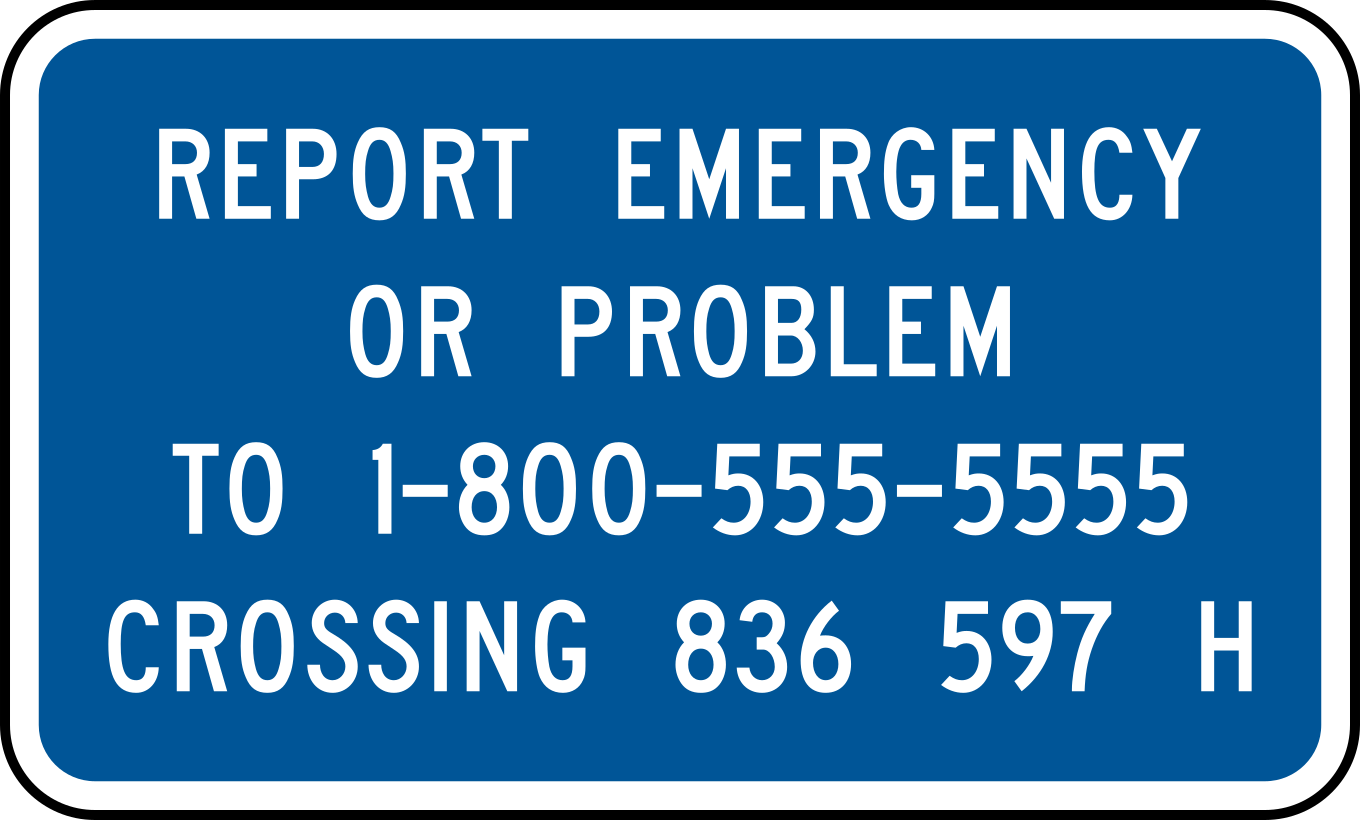
Respuesta correcta: un número de teléfono y una identificación del cruce para reportar un problema en ese lugar
Las señales del ENS son azules e incluyen un número de teléfono disponible las 24 horas y un número de identificación del cruce para que se puedan reportar rápidamente a la empresa ferroviaria los peligros o un vehículo averiado.
Fuente: Manual del Conductor de Colorado — Cruce ferroviario (Sistema de Notificación de Emergencias)