Examen de práctica del DMV de Minnesota: Automóvil / Permiso, gratis 2026
El examen de conocimiento Automóvil / Permiso de Minnesota tiene ~40 preguntas y necesitas ~32 correctas (80%) para aprobar. Practica gratis con preguntas escritas del manual oficial del conductor de Minnesota — cada una con una explicación clara, y puedes repetirlo cuantas veces quieras sin registrarte.
Contenido revisado con los manuales oficiales del conductor · 12 de agosto de 2026
Qué incluye el examen escrito de Minnesota
El examen de conocimiento Automóvil / Permiso de Minnesota tiene ~40 preguntas; necesitas ~32 correctas (80%) para aprobar.
Basado en el formato oficial del examen de Minnesota: confirma siempre los detalles vigentes con el DMV de tu estado.
Practica por tema
Concéntrate en un área a la vez: cada tema tiene su propio conjunto de preguntas de práctica de Minnesota.
Aprende las formas, los colores y los significados de las señales reglamentarias, de advertencia y de guía: desde alto y ceda el paso hasta señales de construcción y de zona escolar.
Límites de velocidad, reglas para girar y señalizar, requisitos de luces y cinturón, y las leyes cotidianas que todo conductor debe cumplir.
Cómo interpretar los semáforos, las líneas de carril y las marcas del pavimento, incluidas las líneas amarillas y blancas, las flechas y las luces intermitentes.
Quién pasa primero en intersecciones, cruces de cuatro vías, glorietas y pasos peatonales, y cómo ceder el paso a peatones y vehículos de emergencia.
Distancia de seguimiento, exploración visual, puntos ciegos, uso de las luces y los hábitos que evitan choques y te mantienen en control.
Conducir con seguridad cerca de motocicletas, bicicletas, camiones grandes, peatones y autobuses escolares, y saber quién tiene la prioridad.
Límites de alcohol en la sangre, leyes de tolerancia cero y consentimiento implícito, y cómo el alcohol y las drogas —legales o no— afectan tu conducción.
Estacionamiento legal e ilegal, colores de las aceras, distancias respecto a hidrantes y cruces, y cómo estacionar con seguridad en pendientes.
Elegir una velocidad segura, mantener un colchón de espacio, ajustarte al clima y al tráfico, y entender la distancia de frenado.
Qué hacer cuando algo sale mal: fallo de frenos, reventones de llantas, derrapes y quedarse parado sobre las vías del tren.
El sistema de puntos, la suspensión de la licencia, las reglas de la licencia provisional, los requisitos de seguro y otros aspectos básicos de la licencia.
Cómo aprobar a la primera
- Lee el manual oficial del conductor de Minnesota al menos una vez antes del examen.
- Practica por tema para encontrar tus puntos débiles y corrígelos.
- Haz exámenes completos de práctica hasta aprobar con comodidad cada vez.
- Lee cada explicación: entender es mejor que memorizar.
Examen Automóvil / Permiso de Minnesota — preguntas frecuentes
¿Cuántas preguntas tiene el examen Automóvil / Permiso de Minnesota?
El examen escrito Automóvil / Permiso de Minnesota tiene ~40 preguntas y necesitas ~32 correctas (80%) para aprobar. Nuestros exámenes de práctica reflejan ese formato.
¿Cuántas preguntas puedo fallar en el examen Automóvil / Permiso de Minnesota?
Puedes fallar hasta ~8 de las ~40 preguntas y aún aprobar — necesitas ~32 correctas, que es el 80%.
¿Puedo repetir el examen de práctica?
Sí: practica cuantas veces quieras, totalmente gratis. Las preguntas y las opciones de respuesta se mezclan cada vez.
¿Puedo hacer el examen de práctica de Minnesota en español?
Sí. Aquí cada pregunta está disponible en inglés y español — cambia de idioma cuando quieras. Muchos estados también ofrecen el examen real en otros idiomas además del inglés; confirma qué ofrece Minnesota con tu DMV.
¿Puedo practicar en mi teléfono?
Sí. Los exámenes de práctica funcionan en cualquier navegador móvil o de escritorio — sin app ni registro — para que estudies donde sea.
¿Son estas las preguntas reales del examen del DMV?
No. Nuestras preguntas son originales, escritas a partir del manual oficial vigente del conductor de Minnesota para reflejar los temas y el estilo del examen real. No estamos afiliados a ningún DMV ni agencia gubernamental.
¿Cuál es la mejor manera de estudiar?
Lee el manual del conductor de Minnesota, practica por tema para reforzar tus áreas débiles y termina con exámenes completos hasta aprobar de forma constante.
Otros exámenes de práctica de Minnesota
Haz el examen Automóvil / Permiso en otro estado
Cada pregunta de Minnesota se escribe a partir del manual oficial del conductor de Minnesota y se verifica con su edición vigente. DMV Test Free es un recurso de estudio gratuito e independiente, sin afiliación con ningún DMV o agencia gubernamental. Acerca de DMV Test Free
Preguntas del examen Automóvil / Permiso de Minnesota con respuestas
20 preguntas de ejemplo del banco de preguntas Automóvil / Permiso de Minnesota, cada una con la respuesta correcta, una breve explicación y la sección del manual oficial de la que proviene.
Ver las 20 preguntas con respuestas
1. ¿En qué posiciones de las manos recomienda el manual sujetar el volante?
Respuesta correcta: Las 9 y las 3, o las 8 y las 4 en punto
Las manos a las 9 y las 3 o a las 8 y las 4 las mantienen alejadas de la bolsa de aire; la antigua posición de las 10 y las 2 se desaconseja.
Fuente: Capítulo 3 - Sugerencias de seguridad para la bolsa de aire
2. Las señales reglamentarias blancas, como las de límite de velocidad, ¿qué propósito cumplen?
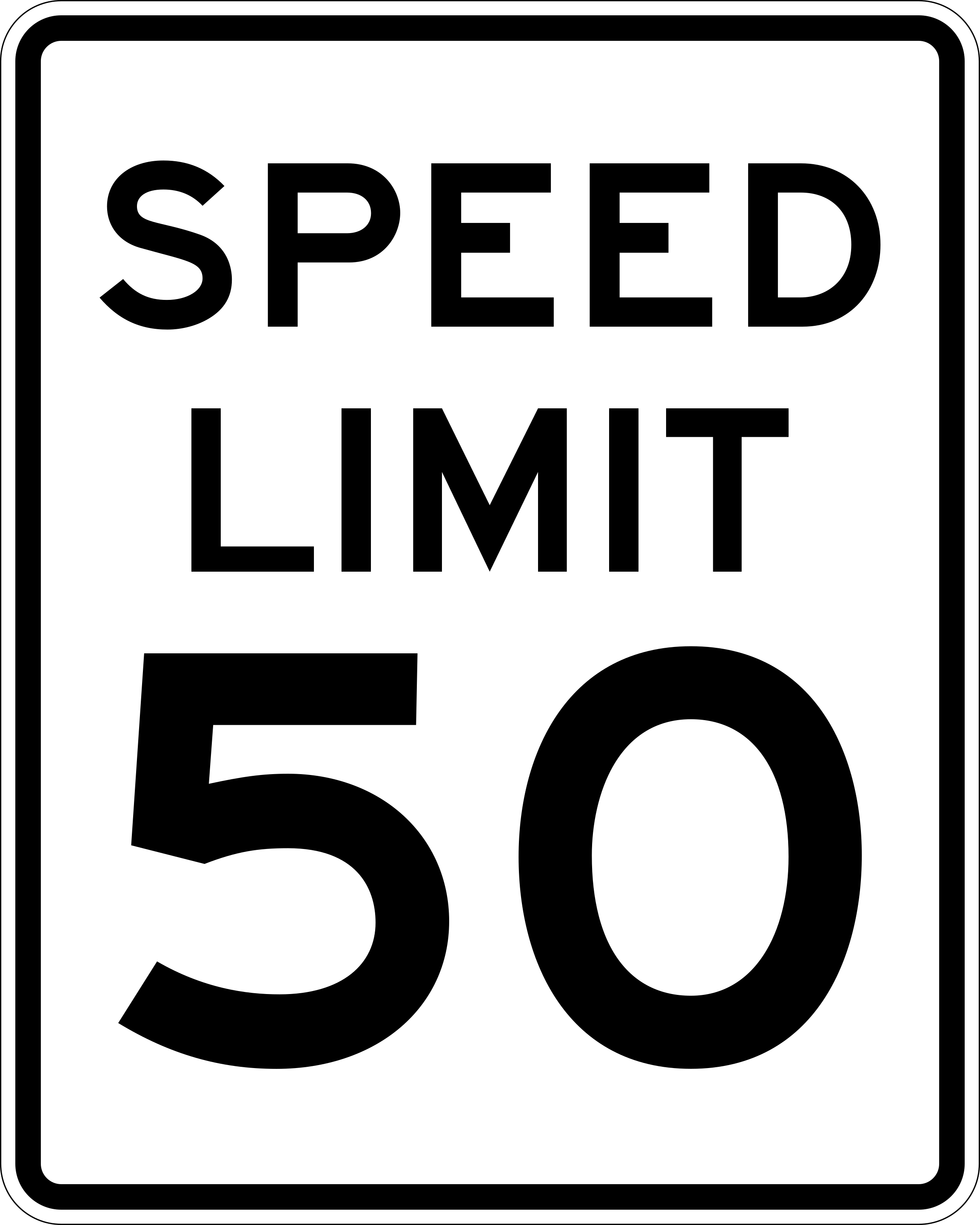
Respuesta correcta: Le indican las leyes de tránsito que debe cumplir
El blanco es el fondo de las señales reglamentarias que indican las normas que usted está obligado a obedecer, como la velocidad máxima.
Fuente: Capítulo 5 - Señales reglamentarias
3. Si debe estacionar en una carretera de noche, ¿qué luces debe mostrar su vehículo?
Respuesta correcta: Una luz delantera blanca o ámbar y una luz trasera roja visibles desde 500 pies
De noche en una carretera, muestre al menos una luz delantera blanca o ámbar y una luz trasera roja, cada una visible desde 500 pies.
Fuente: Capítulo 3 - Estacionar en la carretera
4. Su auto hace contacto con un cable eléctrico caído o un poste de servicios públicos. ¿Qué debe hacer?
Respuesta correcta: Permanecer dentro y llamar al 911, suponiendo que los cables están energizados
Permanezca en el vehículo y pida ayuda; salga solo si se incendia y, en ese caso, salte lejos con los pies juntos y aléjese arrastrando los pies.
Fuente: Capítulo 6 - Choque del vehículo con un poste de servicios o una caja eléctrica
5. No puede rebasar en una colina o curva a menos que tenga una visibilidad clara hacia adelante de al menos, ¿cuánta distancia?
Respuesta correcta: 700 pies
No rebase en una curva o colina donde su visibilidad del camino hacia adelante sea menor a 700 pies.
Fuente: Capítulo 3 - No rebasar
6. Un vehículo de emergencia con luces y sirena se acerca mientras usted conduce por una calle de doble sentido. ¿Qué debe hacer?
Respuesta correcta: Orillarse al borde derecho y detenerse hasta que pase
En un camino de doble sentido, diríjase hacia la derecha y deténgase, permaneciendo ahí hasta que todos los vehículos de emergencia hayan pasado.
Fuente: Capítulo 4 - Ceda el paso a los vehículos de emergencia
7. ¿Cuándo puede una persona ser acusada de DWI con agravante de delito grave (felony) en Minnesota?
Respuesta correcta: En un cuarto DWI dentro de un periodo de diez años
Un DWI como delito grave puede aplicarse a una cuarta infracción en diez años, a un DWI previo como delito grave, o a un homicidio vehicular criminal cometido bajo los efectos.
Fuente: Capítulo 8 - DWI como delito grave
8. ¿Durante cuánto tiempo debe tener un permiso de aprendizaje un conductor menor de 18 años antes de presentar el examen de manejo?
Respuesta correcta: Al menos seis meses
Bajo el sistema de licencias graduadas, los conductores de 18 años o menos deben tener el permiso durante al menos seis meses (tres meses si tienen 19 años o más).
Fuente: Capítulo 1 - Sistema de licencias graduadas (GDL)
9. Al rebasar a un ciclista, ¿qué espacio mínimo debe dejar?
Respuesta correcta: Al menos tres pies entre su auto y el ciclista
Debe mantener al menos tres pies de separación de un ciclista, y puede cruzar la línea central para hacerlo cuando sea seguro, incluso en una zona de no rebasar.
Fuente: Capítulo 4 - Rebasar a un ciclista
10. Cuando está detenido esperando para girar a la izquierda con luz verde, ¿cómo deben estar colocadas sus ruedas?
Respuesta correcta: Apuntando rectas hacia adelante
Mantenga las ruedas rectas mientras espera para girar a la izquierda, de modo que, si lo golpean por detrás, no lo empujen hacia el tráfico que viene de frente.
Fuente: Capítulo 3 - Giros
11. Una luz verde fija del semáforo, ¿qué le permite hacer?
Respuesta correcta: Cruzar la intersección cuando esté despejada, cediendo el paso según sea necesario
Con verde puede avanzar, pero aun así debe ceder el paso a los peatones y, al girar a la izquierda, al tráfico que viene de frente.
Fuente: Capítulo 5 - Semáforos de control de tránsito
12. El requisito del cinturón de seguridad en Minnesota, ¿a quién aplica?
Respuesta correcta: Al conductor y a todos los pasajeros, incluidos los de atrás
Todos los ocupantes del vehículo, adelante y atrás, deben usar el cinturón de seguridad debidamente abrochado, y la policía puede detener un auto solo por una infracción del cinturón.
Fuente: Capítulo 3 - Leyes sobre el cinturón de seguridad
13. Si una señal de Wrong Way (sentido contrario) está frente a usted, ¿qué ha ocurrido?
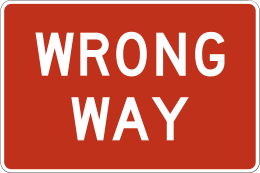
Respuesta correcta: Se dirige hacia el tráfico que viene en sentido contrario
Una señal de sentido contrario significa que ha entrado a un carril en contra del flujo del tráfico y circula en la dirección equivocada; dé la vuelta de forma segura.
Fuente: Capítulo 5 - Sentido contrario
14. Antes de abrir su puerta después de estacionar a un lado del camino, ¿qué debe hacer?
Respuesta correcta: Verificar si se acercan tráfico, bicicletas y peatones
No abra una puerta hasta asegurarse de que no interferirá con el tráfico; esté atento a autos, motocicletas, ciclistas y peatones.
Fuente: Capítulo 3 - Salir de un vehículo estacionado
15. Si su vehículo comienza a derrapar, ¿cuál es la respuesta correcta?
Respuesta correcta: Soltar el acelerador y dirigir el volante hacia donde quiere ir
Mantenga la calma durante un derrape: quite el pie del acelerador, evite frenar bruscamente y dirija el volante hacia donde quiere que vaya el auto.
Fuente: Capítulo 6 - Derrapes
16. En una carretera de dos carriles con un límite señalado de 55 mph o más, ¿cuánto puede aumentar la velocidad al rebasar legalmente?
Respuesta correcta: Hasta 10 mph
Al rebasar legalmente en una carretera de dos carriles con un límite señalado de 55 mph o más, puede ir hasta 10 mph más rápido para completar el rebase.
Fuente: Capítulo 3 - Límites de velocidad
17. ¿En qué tipo de camino puede continuar y pasar junto a un autobús escolar con las luces rojas intermitentes que está en el lado opuesto?
Respuesta correcta: Una carretera dividida, cuando usted va en sentido contrario
Solo en una carretera dividida, circulando en sentido opuesto al autobús, está exento de detenerse por sus luces rojas intermitentes.
Fuente: Capítulo 4 - Rebasar un autobús escolar
18. ¿A partir de qué concentración de alcohol un dispositivo de bloqueo de encendido impide que arranque un vehículo?
Respuesta correcta: 0.02 o más
El dispositivo de bloqueo está conectado al arranque y bloquea el encendido si registra 0.02 por ciento o más cuando usted sopla en él.
Fuente: Capítulo 8 - Programa del dispositivo de bloqueo de encendido
19. ¿A qué edad puede una persona obtener un permiso de aprendizaje de Minnesota?
Respuesta correcta: 15
Puede solicitar un permiso de aprendizaje a los 15 años una vez que cumpla con los requisitos de educación, identificación, visión y examen escrito.
Fuente: Capítulo 1 - Su permiso de aprendizaje
20. ¿Dónde no se le permite operar una bicicleta motorizada (ciclomotor)?
Respuesta correcta: En aceras, autopistas y senderos destinados a peatones y bicicletas
Los ciclomotores tienen prohibido circular por las aceras, las autopistas y los senderos reservados para peatones y bicicletas.
Fuente: Capítulo 4 - Bicicletas motorizadas